What makes a great CRM integration for a scheduling app?
The quality of a CRM integration determines whether a scheduling tool becomes a productivity multiplier or just another system to manage. Here are the essential criteria that define CRM-scheduling synergy:
Workflow and Automation Triggers
Integration depth reveals itself in automation capabilities. Does the scheduling app trigger email sequences when someone books? Automatically assign contacts to specific pipelines? Update deal stages or create tasks for sales reps?
Dan Sondhelm, CEO of Sondhelm Partners, emphasizes the importance of automatic data capture. “When someone books a meeting and answers our context question, such as their biggest challenge or what they want to discuss, those answers are entered into our CRM immediately,” says Sondhelm. “Our team reviews that information before the call, rather than going in blind.”
Using a tool like HubSpot’s meeting scheduler helps streamline this. Workflows are triggered the moment a meeting is booked. The tool will automatically send confirmation emails with prep materials, notify team members via Slack, create follow-up tasks, update deal stages, or enroll contacts in nurture campaigns.
Bidirectional Data Sync
A true integration maintains constant, two-way communication between the scheduling platform and CRM. When a prospect books a meeting, contact records update instantly with meeting details and engagement history. When a rep updates contact information in the CRM, those changes reflect in the scheduling system’s routing logic.
For example, HubSpot’s meeting scheduler creates automatic bidirectional sync between scheduled meetings and contact records. All meeting activity, including bookings, cancellations, and reschedules, automatically logs to the timeline, giving teams complete visibility without manual entry.
Automatic Contact Creation
The best integrations intelligently handle new contacts while preventing duplicate records. When prospects book their first meeting, the system creates a clean contact record. For returning contacts, it recognizes existing records and appends new meeting data to them.
HubSpot’s free meeting scheduling tool automatically checks for existing contact records using email as the unique identifier. New contacts are created instantly with all form data, while existing contacts have meetings added to their timeline, preventing database clutter.
Real-Time Calendar Availability
Integration quality shows in availability handling. Advanced integrations sync availability in real-time across all connected calendars, preventing double-bookings and showing only genuinely available time slots.
Using an integrated tool like HubSpot’s meeting scheduler makes it easy to pull real-time availability from Google Calendar, Office 365, and Exchange. As reps’ calendars update throughout the day, their scheduling page reflects changes instantly. Teams can set buffer times, minimum notice periods, and rolling availability windows while maintaining sync across the entire calendar ecosystem.
Comprehensive Data Logging
In sales, every interaction matters. Superior integrations capture when prospects viewed a scheduling page, reschedule frequency, meeting type selections, and custom form responses, automatically attaching everything to contact records.
Patrick Calder, marketing director at Distillery, also notes that one of the benefits of better data logging is better attribution. “By linking your scheduling app with your CRM, you can accurately measure which marketing campaigns result in scheduled meetings,” says Calder. “If a lead consumes white papers and attends a webinar before they’re ready to book, for instance, the system can factor in that behavior without reps lifting a finger.”
For sales teams that use HubSpot’s meeting scheduler, the tool captures the entire scheduling journey on the contact timeline. See when someone viewed the booking page, what they submitted in custom fields, and their complete meeting history. This detailed data arms sales reps with insights before every conversation.
Multi-User Routing and Assignment
For growing sales teams, meeting routing is essential. Advanced CRM integrations support round-robin distribution, territory-based assignment, and load balancing, automatically syncing assignments in the CRM.
With Sales Hub or Service Hub seats, sales leaders can create round-robin scheduling pages that automatically distribute meetings across the team based on availability and workload. HubSpot assigns prospects to reps and updates contact ownership in the CRM accordingly. Group scheduling allows prospects to book with multiple team members simultaneously.
How to Compare Scheduling Software With CRM Integrations
Choosing the right scheduling tool requires sales leaders to look beyond features to understand the depth of integration. Use this framework when evaluating options:
- Integration entities: What CRM objects can the app create, read, or update? Look for tools that work with contacts, companies, deals, and custom objects, not just calendar events.
- Automation triggers: Can the tool kick off workflows based on scheduling activity? Evaluate whether users can trigger actions on bookings, cancellations, reschedules, and no-shows.
- Setup complexity: How much technical lift is required? Consider authentication requirements, field mapping, API limits, and whether developer resources are needed.
Best Scheduling Apps That Sync With Your CRM
The top scheduling apps that sync with a sales CRM include native tools like Sales Hub and integrated scheduling tools like Calendly. Below is a comparison of the best scheduling apps with CRM integration.
1. HubSpot Sales Hub
HubSpot Sales Hub is a comprehensive CRM platform for sales and revenue teams. As an integrated CRM with scheduling, that means every meeting booked, call made, or assistant-suggested action flows directly into the CRM without friction.
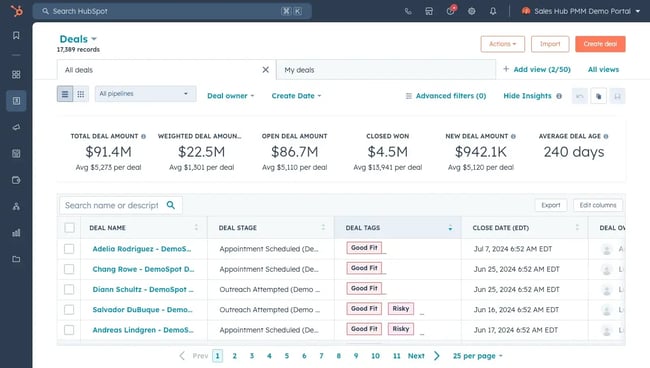
The CRM includes native scheduling capabilities that include three integrated tools:
- Meeting scheduler for automated bookings
- Click-to-call for instant phone connections
- AI meeting assistant for intelligent prep and follow-up
The integrated meeting scheduler lets prospects book directly into sales reps’ calendars through shareable links or embedded widgets. It connects with Google Calendar, Office 365, and Exchange for real-time availability, automatically syncing every booking to contact records. Round-robin scheduling automatically distributes incoming meetings based on availability and workload, updating contact ownership in the CRM. Group scheduling allows prospects to book with multiple team members simultaneously.
Click-to-call links allow users to click any phone number to be directly connected to a specific phone. All calls automatically log to contact timelines with duration, recording, and notes, creating complete records without manual entry.
The built-in AI Meeting Assistant surfaces relevant contact insights and engagement history before meetings, so reps enter conversations prepared. After meetings, it helps log notes, suggests next steps, and can draft follow-up emails. For teams using call recording, it transcribes conversations and highlights key moments.
Pricing: Meeting scheduler is available for free with any HubSpot account. Round-robin scheduling, group meetings, and custom branding require Sales Hub or Service Hub Starter, which is $9/month per user. HubSpot’s AI meeting assistant is available with Professional and Enterprise editions.
What I like: HubSpot’s native tools eliminate integration headaches. No authentication to manage, no field mapping to configure, no sync delays. Everything works because it’s built into the same platform. Plus, the free tier is useful for growing teams not ready for premium features.
2. Calendly
Calendly is a standalone scheduling tool that integrates with major CRMs, including HubSpot. The tool built its reputation on simplicity: share a link, let people pick a time, done.
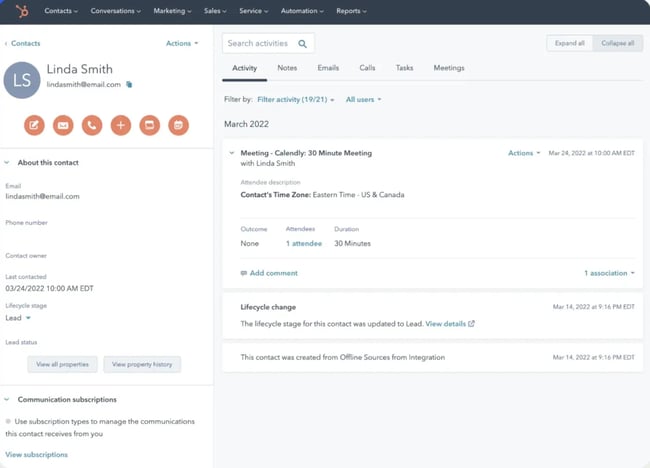
Prospects see rep availability in their time zone, select a slot, and receive automatic confirmations and reminders. Multi-calendar checking prevents double-bookings across email platforms. Team scheduling includes round-robin for distributing meetings and collective meetings for groups.
The CRM integration makes it easy to create contact records when new prospects book and update existing records with meeting details. However, the integration only operates one-way. As in, data flows from Calendly to the CRM.
Pricing: Free tier available; paid plans start at $12/month per seat for Standard, $20/month for Teams, and Enterprise pricing starting at $15K.
Best for: The clean, unintimidating interface is perfect for individuals or small teams.
3. Chili Piper
Chili Piper targets B2B sales teams with AI-powered routing that qualifies and distributes leads intelligently. The platform’s specialty is instant booking as it allows prospects to schedule directly from web forms, emails, or chat.
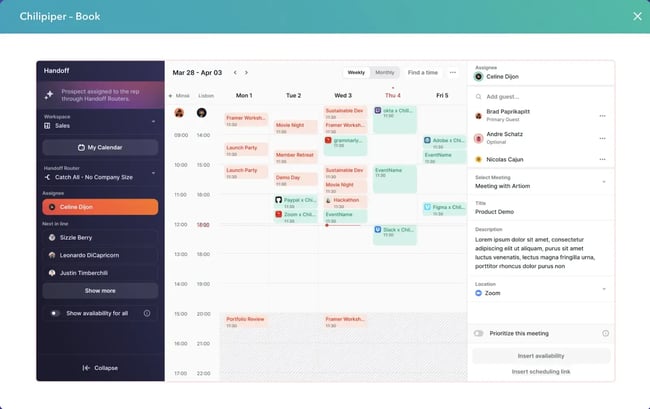
As a scheduling app with CRM integration, Chili Piper offers real-time availability updates, automatic field updates, and workflow triggers. Its HubSpot integration also includes contact creation, activity logging, and workflow enrollment.
Pricing: ChiliCal is $22.50/month per user; full platform pricing is $45/month per user.
Best for: Chili Piper is best for high-velocity sales where speed-to-lead matters. For example, the instant booking from forms and emails reduces friction at critical conversion points.
4. Acuity Scheduling
Acuity offers service-based businesses features for client management, appointment packages, and recurring bookings. The scheduling tool also includes packages and memberships, gift certificates, intake forms, and deposits, making it particularly useful for paid appointments and services. Calendar customization allows different services with unique durations, pricing, and availability rules.
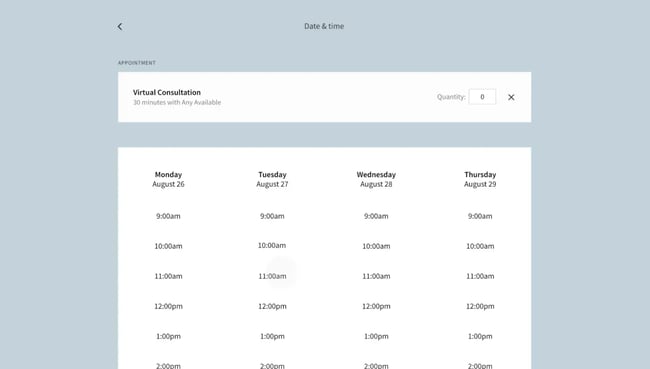
The scheduling app primarily integrates with CRMs via Zapier. However, native integrations are limited compared to B2B scheduling tools.
Pricing: Plans start at $16/month.
Best for: Service businesses needing client management beyond basic scheduling. Acuity is also best for businesses that already use Squarespace, as the two are deeply integrated.
5. Zoho Bookings
Zoho Bookings is appointment scheduling software that integrates tightly with the Zoho ecosystem, making it natural for teams using Zoho CRM or Zoho One. The scheduling app handles individual appointments, group bookings, and class scheduling with resource management for rooms and equipment for in-person meetings.
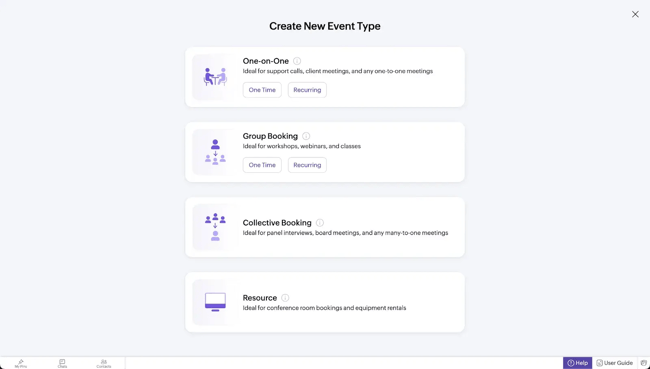
The CRM integration is native and comprehensive for Zoho CRM users. Bookings automatically create or update contact records, log activities, and trigger workflows. For non-Zoho CRM users, a Premium plan and third-party connectors are required.
Pricing: Free plan available for single users; paid plans start at $8/month per user.
Best for: Zoho Bookings makes sense for users already in the Zoho ecosystem.
6. Setmore
Setmore is a free online scheduling platform for small teams and professional services. The tool offers customizable online booking pages that can stand alone or be linked to an organization’s website or email. Setmore also offers calendar management, appointment reminders, and staff scheduling. It can integrate with CRMs like HubSpot, as well as major website CMS platforms, including Squarespace, WordPress, and Shopify.
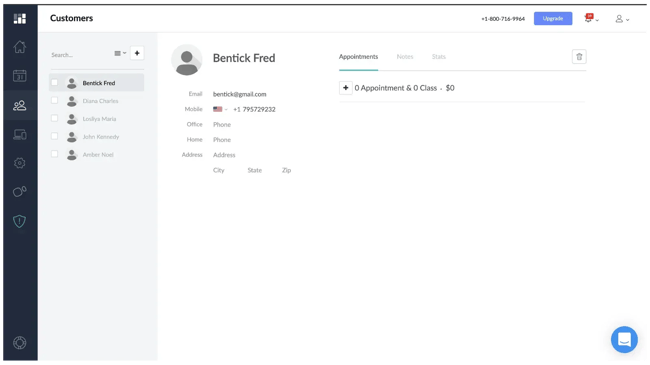
Pricing: Free for up to four users; paid plans are $5/month per user.
What I like: Setmore has a straightforward interface and connects with most major websites and CRMs. This helps small businesses and sales teams with quick deployment.
7. SimplyBook.me
SimplyBook.me is an appointment scheduling app that’s built for service businesses. For CRM integration, SimplyBook.me can connect to an existing website through Zapier. CRM integration depth is moderate compared to B2B tools and natively-integrated CRMs.
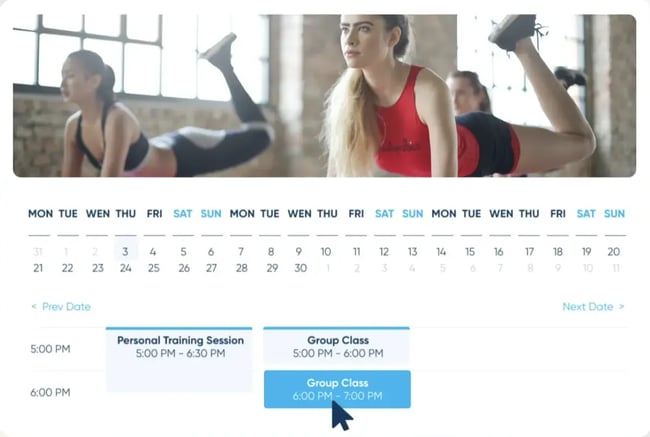
Its core features include:
- Online booking directly through social media, a branded booking page, or integration with an existing website
- Online payment processing through Stripe, PayPal, or in-person POS systems
- Additional booking features such as memberships, classes, loyalty system, or product sales
Pricing: Free plan available; paid plans start at $11.90/month per user.
Best for: The online scheduling platform is designed for service providers, consultants, and in-person sales teams, especially those who accept online payments for appointments.
When to Choose Native Scheduling In Your CRM vs. Marketplace Apps
Choosing between a native scheduling app and a marketplace tool comes down to integration depth, team complexity, and automation requirements. Below are the key considerations for each path.
Choosing Native CRM Scheduling
Sales teams should choose native CRM scheduling when they want unified data architecture without sync risks. Native schedulers store all customer data and scheduling activity in a single database, eliminating the risk of duplicate records or data discrepancies.
This is also ideal when the sales team is already invested in the CRM ecosystem, as it doesn’t require additional authentication or training. Sales automation and workflow integration are critical for triggering sequences and updating deal stages instantly. Native tools are also best for those who prioritize simplicity over specialty features for core scheduling needs.
Choosing Marketplace Apps
Standalone scheduling apps are best for teams that need specialized capabilities, such as AI-powered routing or instant form-to-meeting booking. These apps can also be beneficial for enterprise teams whose tech stack spans multiple CRM platforms and needs scheduling consistency across them.
Finally, marketplace apps may be best for teams operating in a specific industry and requiring unique features, such as HIPAA compliance or resource allocation.
Many teams use a hybrid approach. CRMs with native scheduling, such as HubSpot Sales Hub, are best for most sales meetings, while marketplace apps can be used for specific use cases. This gives sales teams the best of both worlds while limiting complexity.
Frequently Asked Questions About Scheduling Apps With CRM Integration
Do I need a native scheduler if I already use a marketplace app?
Not necessarily. If the current tool meets the team’s needs and integrates reliably, switching may not be necessary.
That said, native scheduling is worth considering when a sales team:
- Experiences syncing issues or duplicate contacts
- Is building complex automation workflows where native tools offer tighter integration
The decision comes down to feature requirements versus integration depth. When a marketplace app provides critical capabilities that can’t be replicated natively, it makes sense to maintain it. For teams using basic scheduling features, native options simplify the stack — and often eliminate the middleware that standalone tools require.
How do I prevent duplicate contacts when new meetings come in?
Most CRM integrations use email addresses as the unique identifier. When someone books, the system checks if a contact with that email exists. If found, it appends the meeting to the existing record. If not, it creates a new contact. HubSpot’s native meeting scheduler handles this automatically.
Can I trigger sequences or workflows automatically after a meeting is booked?
Yes, this is one of the most valuable aspects of scheduling-CRM integration. Sales teams can use the meeting booking event as a trigger for automated actions.
In HubSpot Sales Hub, teams can create workflows with enrollment triggers set to ‘Meeting is booked.’ When prospects book meetings, they automatically enter these workflows. Send confirmation emails with prep materials, notify sales reps via Slack, create follow-up tasks, or enroll contacts in sequences based on meeting type.
What if my team uses multiple calendars and round robin routing?
Modern scheduling platforms handle both. The best tools check availability across all connected calendars simultaneously to prevent double-bookings. HubSpot’s meeting scheduler, for example, supports multiple calendar connections.
Round-robin routing requires more sophisticated logic. Basic implementations simply rotate assignments. Better ones consider current workload, time zones, and availability. HubSpot’s round-robin scheduling — part of Sales Hub — creates team scheduling pages showing aggregated availability. When prospects book, HubSpot assigns them to the least-busy available rep and updates contact ownership.
How should I handle cancellations and reschedules in my CRM?
Ensure the scheduling tool logs cancellations and reschedules as distinct activities in the CRM. When someone cancels, record it on their timeline with the cancellation reason if possible. For reschedules, both old and new meeting times should appear in the activity history. This creates a complete picture of scheduling behavior.
It’s also essential to automate response workflows for these events. Create workflows triggered by cancellations that send “sorry to miss you” emails with reschedule options. For reschedules, send updated confirmations with the new time. Most modern scheduling tools allow self-service cancellation and rescheduling through links in confirmation emails, reducing administrative burden. HubSpot’s meeting scheduler includes these links, and updates are instantly reflected in both calendar and CRM.
Sync your scheduling with your CRM
The best scheduling app with CRM integration does more than eliminate calendar coordination — it turns every booked meeting into a structured data event that automatically feeds the sales workflow. The gap between basic calendar sync and true CRM integration determines whether a scheduling tool becomes a productivity multiplier or just another system to manage.
Sales teams should match integration depth to their automation requirements. Teams that need workflows triggered by scheduling events, unified reporting across the customer journey, or real-time contact updates should prioritize deep CRM integration. Teams with specialized routing or compliance needs may find that a marketplace app fills the gap.
HubSpot Sales Hub offers the seamless data flow and zero-maintenance setup of a native meeting scheduler, along with a built-in AI meeting assistant for intelligent prep and automated follow-ups.