Until a few years ago, sales prospecting techniques like making generic cold calls and sending untargeted mass emails worked well. Today, those methods are outdated, and buyers have tuned them out.
 2025 Sales Trends Report, 29% of reps can’t stand out from the competition, and 44% still give up after just one follow-up.
With the right strategies, data, and a genuine drive to deliver value, sales teams can turn prospecting into one of the most powerful levers for pipeline growth. Below, we explore 14 effective sales prospecting techniques to help reps find better leads faster.
Table of Contents
- What is sales prospecting?
- Sales Prospecting Methods
- Sales Prospecting Techniques
- Frequently Asked Questions About Sales Prospecting
What is sales prospecting?
Sales prospecting is the process of identifying and contacting potential customers who may benefit from a product or service. It’s the first step in building a healthy sales pipeline and allows businesses to focus their efforts on those most likely to become paying customers.
In prospecting, it’s important to understand the difference between leads, prospects, and opportunities. A lead is someone who has shown initial interest or fits the target profile. A prospect is a qualified lead who is more likely to buy based on factors such as need, budget, or decision-making authority. An opportunity is a prospect who has entered the active sales process.
Prospecting outreach can be cold or warm. Cold outreach targets people with no prior interaction, while warm outreach engages those who already have some awareness of or connection to a business.
Sales Prospecting Methods
Sales prospecting methods are the ways a salesperson conducts outreach to generate new leads or engage existing ones. Effective prospecting methods can vary by sales organization and industry and may include email outreach, social selling, event networking, and warm phone outreach.
Traditionally, there are two types of prospecting: outbound and inbound. Outbound is an approach in which the salesperson conducts “cold” outreach by calling and emailing prospects who have not opted in to receive such communications.
Inbound sales takes the opposite approach, encouraging salespeople to build relationships with prospects and to call or email only those who have expressed interest in their product or service.
Today, most sales experts agree that the best approach to sales prospecting is a combination of both inbound and outbound selling. Irrespective of the approach used, qualifying prospects is essential to help reps communicate with valuable prospects.
Qualifying Prospects: BANT, CHAMP, and MEDDIC
Qualifying prospects helps reps build a healthy pipeline, and three frameworks can support that effort. Each one provides a structured way to assess fit, urgency, and buying readiness during conversations. Used well, they turn discovery calls from casual chats into focused qualification.
BANT (Budget, Authority, Need, Timeline)
BANT is a widely used lead qualification framework. It asks whether a prospect has the budget to buy, the authority to decide, a genuine need for the solution, and a clear timeline for purchasing.
When chatting with a lead, ask qualifying questions like:
- Have you allocated a budget for this?
- Who else is involved in the decision?
- What problem are you trying to solve?
- When do you want this in place?
Red flags when using this framework include unclear budgets, vague timelines, or speaking only to someone without decision-making authority. Even if a prospect expresses strong interest, their inability to answer typical questions, especially about budget, suggests the deal may stall.
CHAMP (Challenges, Authority, Money, Prioritization)
CHAMP flips the BANT order by leading with the prospect’s challenges rather than the budget. That makes it suited to consultative selling, where understanding pain comes before discussing price.
Qualifying questions to ask with CHAMP include:
- What’s the biggest challenge you’re dealing with right now?
- Is anyone else expected to be involved in the purchasing decision?
- Do you or someone else own the budget for the purchase?
- What are your top priorities right now?
A red flag here is a prospect who struggles to articulate a specific challenge — without a clear problem, there’s no compelling reason to buy.
MEDDIC (Metrics, Economic Buyer, Decision Criteria, Decision Process, Identify Pain, Champion)
MEDDIC is the most rigorous of the three, and teams often use it in complex B2B sales. It drives reps to quantify the prospect’s pain (e.g., “losing 10 hours a week to manual reporting”), identify who controls the budget, and map the internal decision process.
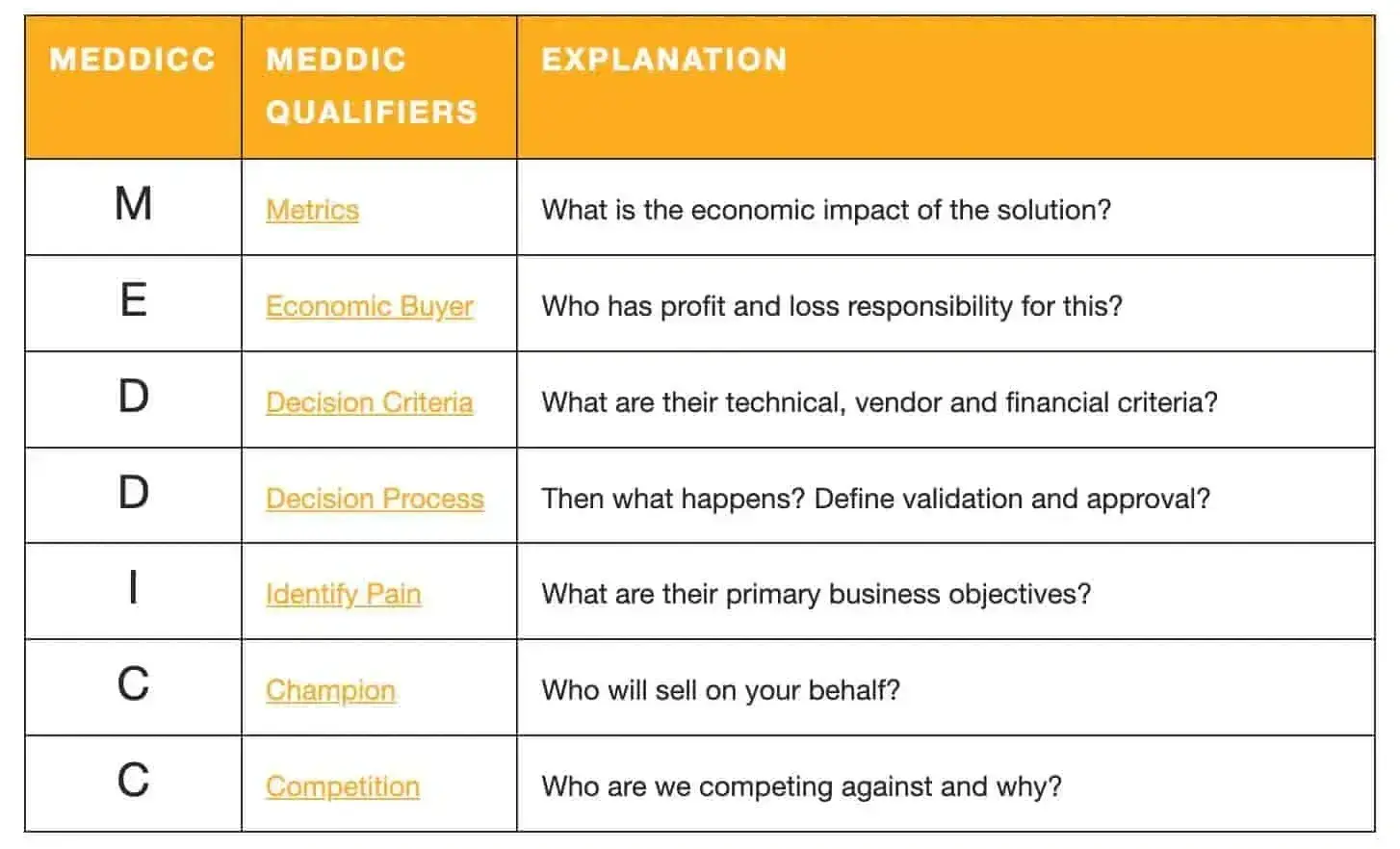
A red flag in the MEDDIC framework is the absence of a clear internal champion — without someone advocating internally, deals frequently go cold.
Sales prospecting techniques are the specific tactics reps use to identify, engage, and qualify potential buyers. The most effective techniques combine personalization, consistent follow-up, and the right mix of channels, including phone, email, video, social selling, events, and referrals.
1. Make warm calls.
Cold outreach doesn’t have to start cold. Warming up a prospect before the first call significantly increases the chances of a positive reception.
Reps can achieve this by getting introduced through a shared connection, commenting on content the prospect shared on social media, or engaging with a LinkedIn update such as a job change or work anniversary. AI platforms like Clay or Apollo can surface real-time prospect activity, giving reps timely, relevant reasons to reach out rather than relying on generic openers. Teams using HubSpot can also use the Breeze prospecting agent to research accounts, surface relevant context, and draft more personalized outreach before the first call.
The goal is simple: make the prospect recognize the name before the call comes in.
2. Build thought leadership.
Establishing credibility before the first outreach removes much of the friction from prospecting. When a prospect already recognizes a rep as a knowledgeable voice in the industry, the conversation starts from a position of trust rather than skepticism.
Practical ways to build thought leadership include writing for industry publications, speaking at conferences, posting consistently on LinkedIn, and contributing to niche communities on platforms like Reddit or Slack groups.
AI tools can speed this up — reps can use them to identify trending topics in their industry, generate content outlines, or repurpose long-form content into shorter social posts, making consistent publishing more achievable alongside a full sales workload.
3. Be a trusted resource.
The best salespeople don’t disappear after signing a contract; they do more than sell. Staying engaged after closing the sale — sharing relevant industry updates, checking in on outcomes, offering guidance — shifts the relationship from transactional to consultative.
That matters for prospecting because satisfied customers become a reliable referral source. When reps position themselves as long-term partners rather than one-time vendors, clients become more likely to make introductions to their networks.
AI-powered CRM tools like HubSpot can help reps stay on top of these relationships at scale, flagging when key accounts haven’t been contacted in a while or surfacing relevant news about a client’s business that creates a natural reason to reach out.
4. Reference call scripts.
For newer reps, a script provides a reliable foundation — reducing uncomfortable pauses, reinforcing the right messaging, and providing ready responses to common objections.
Experienced reps often move beyond rigid scripts, but many still work from a loose framework so deeply internalized that it sounds entirely natural. The key distinction is between reading a script and being guided by one.
AI tools have made scripting more dynamic. Platforms like Gong or Chorus analyze real call recordings to identify which phrases, questions, and sequences correlate with positive outcomes, allowing teams to build scripts grounded in actual performance data rather than intuition.
Regardless of format, active listening remains essential; the best script in the world fails if the rep isn’t adapting to what the prospect is saying.
5. Don’t sell.
Prospecting is the first step in the sales process, but it’s not selling. The aim at this stage is to identify and qualify leads, not to close them. Jumping into a pitch too early puts pressure on the prospect and often kills the relationship before it starts.
The most effective prospectors focus on building genuine rapport and understanding the prospect. What challenges are they navigating? What does success look like for them? These conversations lay the foundation for later sales conversations to be far more effective.
AI can add precision here. Tools like Cognism and ZoomInfo, which analyze intent data and buying signals, help reps identify prospects who are already in research mode, so outreach feels timely and helpful rather than intrusive.
6. Follow up.
Consistent follow-up is one of the most under-leveraged habits in sales. Every touchpoint — whether confirming a meeting, sharing a relevant resource, or recapping a conversation — is an opportunity to reinforce credibility and sustain momentum.
Most deals require multiple touchpoints before a prospect engages meaningfully, yet nearly half of reps walk away after a single follow-up. Effective follow-up is about adding value at each step, not just following up with “just checking in.”
For teams trying to scale thoughtful outreach, HubSpot’s AI email writer can help reps draft follow-up emails faster and tailor messaging to a prospect’s needs.
7. Use video.
Video outreach cuts through inbox noise in a way that plain text rarely does. A short, personalized video — introducing a rep, recapping a discovery call, or walking through a relevant insight — signals effort and creates a more memorable impression than a standard email.
Adding “video” to a subject line can improve open rates by showing prospects what to expect. Also, including a thumbnail that links to the video can drive higher click-through than a text link alone.
AI tools have made video prospecting faster and more scalable. Platforms like Vidyard or Loom allow reps to record and track engagement, showing who watched, how long they watched, and whether they rewatched any sections. Also, tools like Sendspark allow reps to generate personalized AI videos at scale.
8. Block time for prospecting.
Prospecting isn’t easy to prioritize when inboxes are full and existing deals demand attention. Without dedicated time on the calendar, it gets pushed aside — and the pipeline quietly dries up.
As prospecting becomes more difficult, time blocking becomes even more important. Treating prospecting as a non-negotiable daily or weekly commitment, rather than something to fit in around other tasks, leads to more consistent pipeline activity and better long-term win rates.
9. Spend time on social media.
According to our 2025 sales trends report, social selling is now a strategic sales channel and will only become more important.
As such, social selling is no longer optional. Platforms like LinkedIn are where modern buyers research, engage, and form opinions before ever speaking to a rep. Meeting prospects in those spaces, rather than waiting for inbound interest, puts reps ahead of the competition.
Effective social selling isn’t just content publishing. It’s joining conversations, answering questions, sharing relevant content, and building a visible presence. LinkedIn remains the most valuable platform for B2B prospecting, but depending on the industry, communities on Reddit, X, Facebook Groups, or niche Slack channels can be equally productive.
10. Host a webinar.
Webinar attendees are self-qualifying leads — their presence signals genuine interest in the topic, making them far warmer than a cold-sourced contact. That makes webinars one of the most efficient prospecting channels available.
Partnering with complementary organizations in the same industry to host a webinar expands reach and attracts audiences that might not otherwise be accessible. Post-webinar, a simple poll asking attendees whether they’d like a demo or further information quickly separates active buyers from those still in research mode.
Follow up with interested respondents within 24 hours, as response rates can drop sharply over time. Move those not yet ready to buy into nurture sequences rather than abandoning them.
11. Ask for referrals.
Not asking for referrals leaves one of the most reliable prospecting channels untapped. After closing a new business, ask the prospect or champion if there’s anyone in their professional network you might connect with.
It’s also an excellent idea to use follow-up communications over the next few months as another opportunity to ask for new connections.
For example, after the customer has onboarded (and is happy with their experience), ask, “ I’m so glad you’re already finding value in Sunrise Staffing Software Solutions. Is there anyone in your professional network who might also benefit from chatting with us? “
12. Network at events.
First, find the right events to attend. Identify why people are attending a certain conference, if the agenda has topics relevant to the brand’s ideal customer, what the size of the community is, and the overall purpose of the event.
If the brand sells project management software to entry- and mid-level designers, avoid a conference aimed at design leaders or creative directors who aren’t in the weeds with the software their designers use.
Once the right events are identified, map out which sessions to attend, which networking events to work, and whether the company will have a booth or speaking presence.
13. Answer questions on Q&A forums.
Seek ways to educate target audiences on trends and best practices in the industry, and eventually on the product itself
Online forums, such as Reddit, Slack groups, LinkedIn Groups, and Quora, allow like-minded people to post questions and seek answers from experts in the field. Join these platforms and start by listening.
Getting familiar with how people pose questions, reviewing what is allowed, and chiming in on a few conversations before answering questions builds credibility. After establishing some presence in the community, identify questions that can be answered without bias.
For example, a rep selling machinery for large agricultural operations might answer a question about the impact of AI on farming.
14. Get involved in X chats.
HubSpot’s Head of Content Strategy and Operations Meg Prater, describes using X chats as a way to gain B2B sales leads. They’re an effective way to build rapport with prospects and a natural entry point for social selling.
For example, a rep selling a PPC tool might join the weekly #PPCChat, in which chat runners or guest hosts share a discussion topic ahead of time and industry folks share their thoughts and questions.”
The chat host shares questions, and participants chime in with their answers using the chat hashtag.
Prater says, “Show up to these chats regularly and know when to contribute and when to listen. You’ll make connections with people each week, and you can ask if it’s all right to follow up with a few of them offline, after you’ve built a foundational rapport.”
The most effective prospecting strategies combine the right channels, consistent follow-up, and a genuine focus on delivering value before asking for anything in return. Testing different techniques and tracking what generates engagement is what separates reps who build a predictable pipeline from those who rely on volume alone.
Frequently Asked Questions About Sales Prospecting
What are the five Ps of prospecting?
The five Ps of prospecting are purpose, preparation, personalization, persistence, and practice. Purpose is the goal of a prospecting effort. Preparation involves researching a prospect before outreach. Personalization ensures the message is relevant to the prospect’s needs. Persistence means following up even in the face of setbacks. Practice is the ongoing refinement of prospecting skills by tracking what works and addressing weak points.
What are common prospecting rules?
Effective prospecting follows a few key rules. Target the right audience, qualify leads, personalize outreach, focus on solving problems rather than selling, follow up consistently, and track results.
When is the best time to reach out to prospects?
The best day to make a sales call is Tuesday, with Wednesday a close second, from 10 AM to 12 PM. The best days to send emails are Tuesdays through Thursdays from 9 AM to 12 PM, or 12 PM to 3 PM.
What tools can I use to reach prospects?
Common prospecting tools include CRM platforms (for managing leads), email outreach tools, LinkedIn and social selling platforms, lead databases, and sales engagement tools that automate follow-ups and track responses. Teams that want those workflows in one place can also use Sales Hub to capture, qualify, and nurture prospects with automation and lead-management tools.
What frameworks can I use for prospecting?
Popular prospect qualification frameworks include BANT (Budget, Authority, Need, Timing), CHAMP (Challenges, Authority, Money, Prioritization), and MEDDIC (Metrics, Economic Buyer, Decision Criteria, Decision Process, Identify Pain, Champion). These frameworks help structure discovery conversations and determine whether a prospect is a strong sales opportunity.
Build a prospecting process that works for your team
The right prospecting process makes it easier to find better-fit leads, personalize outreach, and follow up consistently. For teams that want to turn these techniques into a repeatable system, dedicated prospecting tools can help reps move faster without sacrificing relevance
Editor’s note: This post was originally published in November 2015 and has been updated for comprehensiveness.