Deals rarely fall through for a single, obvious reason. More often than not, they lose steam over time as leads wait too long for a response, and follow-ups become inconsistent. Sales acceleration platforms address these gaps by giving teams the tools and automation they need to:
- Automate repetitive tasks like prospecting and email drafting.
- Engage prospects at the right time.
- Understand what’s driving wins and losses across the pipeline.
 Sales Hub, HubSpot Smart CRM, and Breeze can support a CRM-first sales acceleration strategy without forcing teams to stitch together too many disconnected tools.
Table of Contents
- What is a sales acceleration platform?
- Why Teams Should Use a Sales Acceleration Platform
- Types of Sales Acceleration Software
- Top Sales Acceleration Platforms for Growing Businesses
- How to Evaluate a Sales Acceleration Tool
- FAQs About Sales Acceleration Platforms
So, instead of manually tracking follow-ups, guessing when to reach out, or piecing together scattered prospect data, a sales acceleration platform handles much of the heavy lifting, allowing reps to focus on selling. Sales teams typically use these platforms to:
- Prioritize the right leads. Score and rank prospects based on engagement signals, fit, and buying intent, so reps know exactly who to call first.
- Automate outreach sequences. Set up multi-step email, call, and LinkedIn touchpoints that go out at the right intervals without manual input.
- Get real-time buyer intelligence. Surface information like when a prospect opened an email, visited a pricing page, or went quiet for too long.
- Reduce rep ramp time. Give newer reps guided playbooks, call scripts, and templates so they can be productive from day one.
- Track and improve sales activity. Log calls, emails, and meetings automatically, then tie that activity to pipeline outcomes.
Note: A sales acceleration platform is not the same thing as a CRM, though the two are closely related. A CRM serves as the system of record for contacts, companies, deals, and pipeline stages. A sales acceleration platform uses that CRM data to recommend next steps, automate workflows, and help teams move deals forward.
Some CRM products, like HubSpot Smart CRM, include sales acceleration features. So, teams may not need a separate tool for every sales workflow. Still, the distinction matters when teams compare software, integrations, and total cost.
Why Teams Should Use a Sales Acceleration Platform
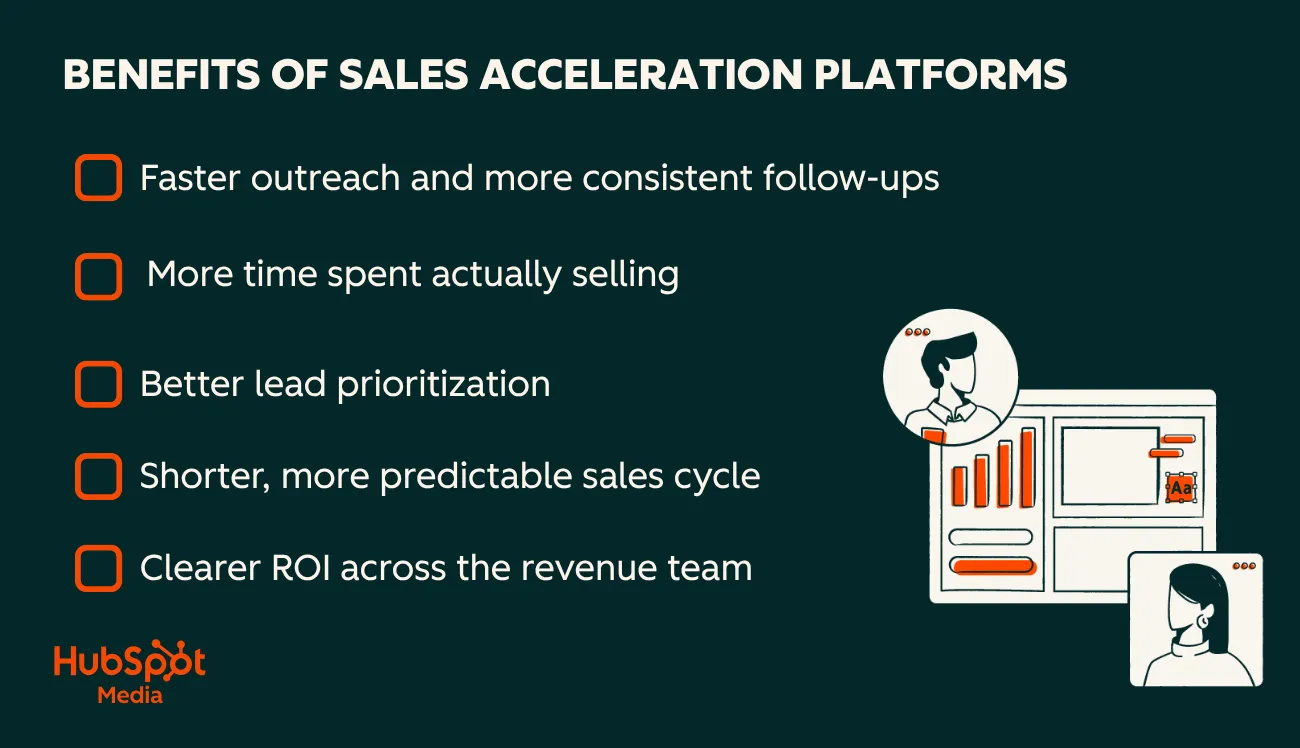
Here’s what teams can gain from using the right sales acceleration platform.
1. Faster Outreach and More Consistent Follow-Ups
Slow response times and missed follow-ups are two of the most common reasons deals go cold. A sales acceleration platform addresses both by enabling teams to set up automated email sequences, schedule multi-step outreach cadences, and trigger follow-ups based on prospect behavior. Nothing slips through the cracks, regardless of how busy things get.
Danny Ray, founder of PinnacleQuote, puts it like this: “When a lead comes in, that person can get a quote, a text, or a follow-up almost right away instead of waiting for someone to manually pick it up.
That first window matters more than people think. If you wait too long, interest drops off fast. Automation helps keep that from happening, and it also cuts down on the number of opportunities that get missed just because somebody got busy or forgot a step.”
2. More Time Spent Actually Selling
The average rep spends 60% of their week on non-selling tasks, such as creating quotes and manually entering data. Sales acceleration software automates or eliminates most of that busywork.
Brandon Schroth, founder at Reporter Outreach, uses Apollo to automate prospecting and outreach: “Before Apollo, I was manually hunting down contacts on LinkedIn, copy-pasting into spreadsheets, and writing every email from scratch.
It was maybe 3 to 4 hours a day of work that felt productive, but wasn’t really selling. Automation cut that down dramatically, which freed me up for actual conversations with prospects.”
The deals didn’t close because of the tool. They closed because Schroth finally had the time to show up properly for his prospects.
3. Better Lead Prioritization
Not every lead deserves the same attention, and reps who treat them equally end up wasting time on prospects who were never going to buy while letting high-intent leads go cold. Sales acceleration platforms use lead scoring to rank prospects based on signals like email engagement, website activity, firmographic fit, and CRM behavior.
That means reps start each day with a clear, data-backed picture of whom to contact first, rather than working off gut feel or whoever emailed last.
4. A Shorter, More Predictable Sales Cycle
A sales acceleration platform also gives teams the intelligence they need to close deals faster. When managers can see exactly where deals are stalling, which reps are following the playbook, and which prospects have gone quiet, they can step in early and course-correct.
Sheraz Ali, founder of HARO Links Builder, describes how the intelligence from HubSpot (which he uses as both his sales analytics and sales acceleration platform) has helped reduce his team’s sales cycle:
“When I’m working with a rep who has a stuck deal, I can now bring up the conversation history, see exactly what the prospect asked, and understand where we might have gone wrong with our messaging or value proposition. This has helped us close deals an average of 12 days sooner.”
5. Clearer ROI Across the Revenue Team
A good sales acceleration platform ties activity data directly to pipeline outcomes, making it easier to see what’s working and what isn’t.
Rather than guessing whether a new outreach sequence is moving the needle, teams can track metrics such as reply rates, conversion rates at each pipeline stage, and overall sales velocity, then use that data to either double down on what’s working or adjust their strategy quickly.
Types of Sales Acceleration Software
Not all sales acceleration tools do the same thing. Here’s a breakdown of the main categories and what each one offers.
1. CRMs With Built-in Sales Acceleration Features
Some CRMs (like HubSpot) go beyond storing contact and deal data. They also include sales acceleration features, which means teams get prospecting, engagement, analytics, and automation all within the same system their reps already use. Sales teams use these CRMs to:
- Manage the full sales process from prospecting to close in one place.
- Trigger automated follow-up sequences based on deal stage or contact behavior.
- Get AI-powered recommendations on next steps for open deals.
- Report on pipeline health and rep activity without exporting data to a separate tool.
2. Prospecting and Lead Intelligence Tools
These tools help reps identify the right people to reach out to and gather the context they need before contacting them. Instead of manually researching prospects across multiple sources, reps get verified contact data, firmographic details, and buying intent signals in one place. Sales teams use them to:
- Quickly build targeted prospect lists based on filters like industry, company size, job title, and tech stack.
- Access verified email addresses and phone numbers.
- Surface intent data to identify prospects actively researching solutions like theirs.
- Automatically enrich CRM records with up-to-date contact and company information.
For teams using HubSpot, sales intelligence apps can connect via the HubSpot Marketplace, allowing reps to enrich CRM records without creating a separate source of truth.
3. Sales Engagement Platforms
Sales engagement platforms manage and automate the outreach process across multiple channels. They organize outreach around cadences: structured, multi-step sequences of touchpoints that run automatically based on prospect behavior or set time intervals. Sales teams use them to:
- Build and run email, call, and LinkedIn sequences without manual scheduling.
- Get real-time notifications when a prospect opens an email or clicks a link.
- A/B test subject lines and messaging to improve reply rates.
- Ensure every lead gets a consistent follow-up experience regardless of which rep owns it.
Sales Hub also includes sales engagement features such as sequences, meeting scheduling, and sales automation, which can help teams manage outreach from the same system they use for CRM data.
4. Conversation Intelligence Tools
These tools record, transcribe, and analyze sales calls and meetings. However, the real value isn’t just in having a record of the conversation. It’s in what the analysis surfaces, such as recurring objections, talk-to-listen ratios, competitor mentions, and moments where deals tend to stall. Sales teams use conversation intelligence tools to:
- Review call recordings to coach reps on specific moments in a conversation.
- Identify the most common objections and build better responses into sales playbooks.
- Track whether reps are actually delivering the right messaging on calls.
- Give new reps access to recordings of top performers to improve their sales techniques.
5. Sales Analytics and Forecasting Tools
These tools turn pipeline data into actionable insights. Rather than relying on gut feel or manually piecing together spreadsheets, sales leaders get a real-time view of pipeline health, rep performance, and revenue forecasts. Sales teams use these tools to:
- Track sales velocity and identify where deals are slowing down.
- Forecast revenue with greater accuracy based on historical data and current pipeline trends.
- Monitor individual rep activity and tie it to outcomes.
- Spot at-risk deals early enough to intervene.
6. Configure, Price, Quote (CPQ) Tools
CPQ tools can speed up the quoting and proposal process, which is often a surprisingly significant source of friction in the sales cycle. When reps have to wait days for an approved quote or manually put together proposals, deals lose momentum and churn. Sales teams use CPQ tools to:
- Generate accurate, branded quotes quickly without back-and-forth with finance or legal teams.
- Automate approval workflows for discounts or custom pricing.
- Send proposals with built-in e-signature capabilities to reduce time-to-close.
- Ensure pricing consistency across the entire sales team.
Top Sales Acceleration Platforms for Growing Businesses
1. Sales Hub + HubSpot Smart CRM
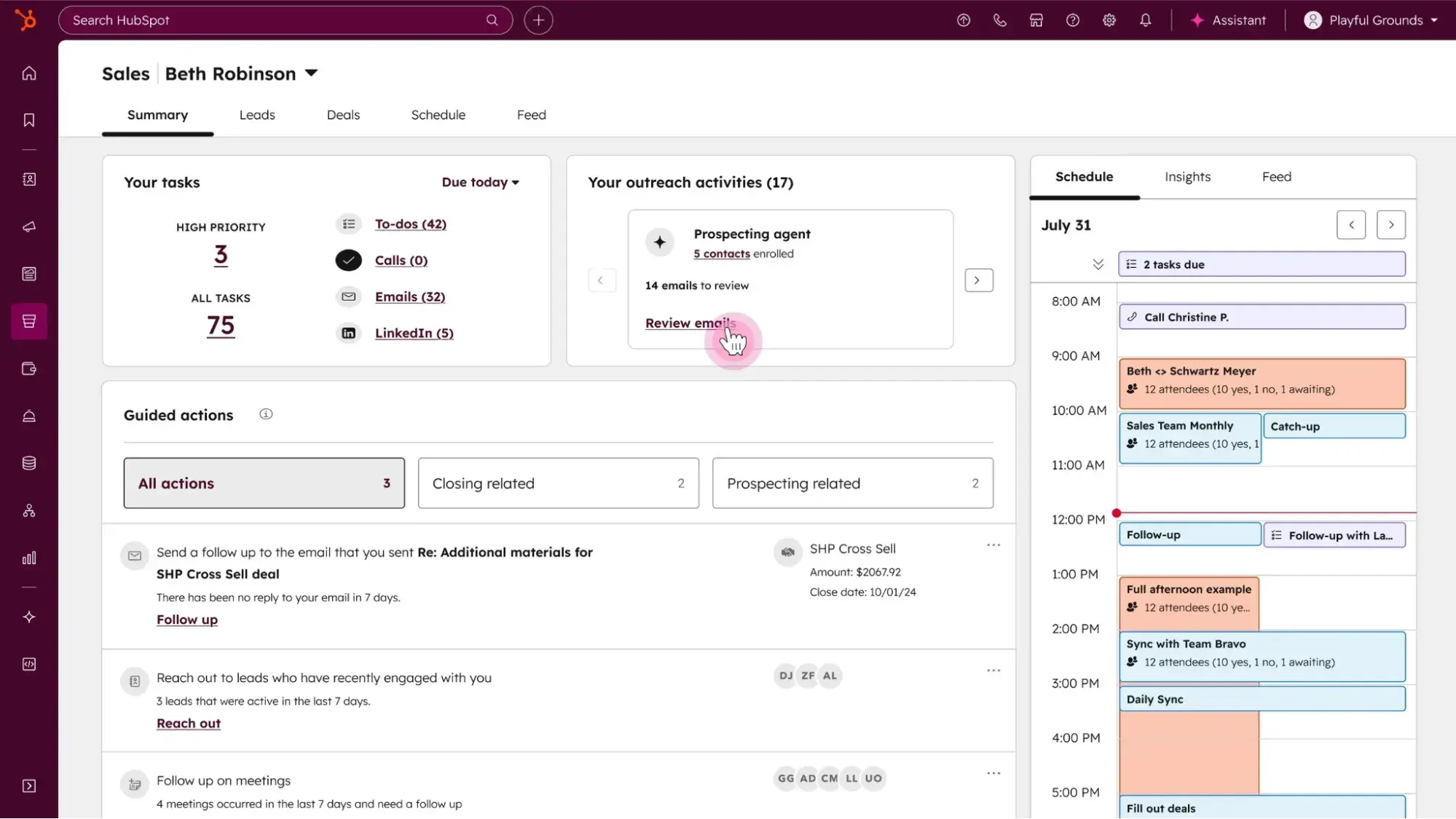
Sales Hub is HubSpot’s sales software and works with HubSpot Smart CRM to help teams manage prospecting, outreach, pipeline activity, forecasting, and deal follow-up in a single connected system.
Because Sales Hub and HubSpot Smart CRM are connected, sales teams can use CRM data to support lead scoring, email outreach sequences, forecasting, and deal management.
The data flows automatically between the two tools, ensuring reps always have the full context they need to engage with prospects and managers always have an accurate picture of the pipeline.
Key Features
- Breeze Prospecting Agent: HubSpot’s AI-powered prospecting agent researches prospects, pulls relevant CRM context, and drafts personalized outreach so reps can spend less time on manual research.
- Automated email sequences: Teams can build personalized, multi-step email sequences that are triggered by prospect behavior or deal stage.
- Sales analytics and forecasting: Sales leaders can track sales velocity, rep activity, and pipeline health in real time, then build forecasts from deal data.
Pricing: HubSpot offers free sales tools. Paid Sales Hub plans start at $20/seat/month, billed annually. HubSpot also offers the Starter Customer Platform for teams that want access to HubSpot’s core products in a single bundle.
What we like: Many sales teams pay for a CRM and separate tools for engagement, prospecting, and analytics, then spend even more money (and time) keeping everything in sync.
HubSpot reduces tool-switching by connecting sales tools and CRM data in one system. Sales Hub pulls data from HubSpot Smart CRM, so reps can manage outreach, deal activity, and follow-up without jumping between disconnected tools.
And with AI handling repetitive tasks like prospecting and email outreach, reps have more time to focus on having conversations and building stronger relationships with prospects.
Best for: Sales teams of all sizes that want a CRM and sales acceleration platform in one place.
2. Apollo
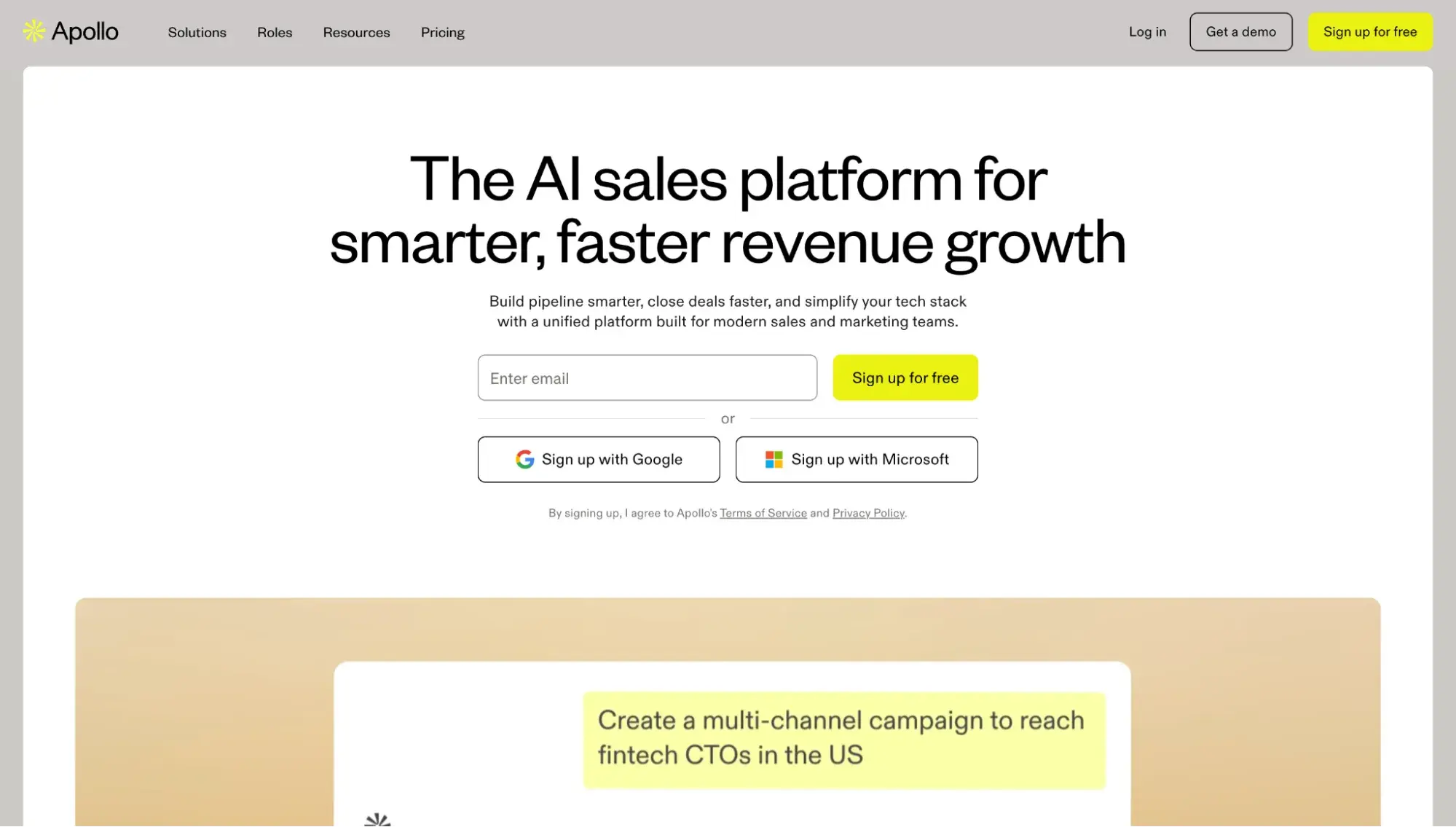
Apollo is a sales intelligence and engagement platform that helps teams find prospects, verify contact information, and run outreach sequences from one system. It helps sales teams find the right prospects, obtain their verified contact information, and reach out to them through automated sequences, all within a single platform.
Key Features
- Contact and company database: Access to a large, regularly updated database of contacts and companies, filterable by job title, industry, company size, location, technology used, and more.
- Email sequencing and automation: Build multi-step outreach sequences that combine emails, calls, and LinkedIn touchpoints, and personalize at scale using dynamic fields and AI-assisted writing.
- Lead scoring and intent data: Automatically score leads based on engagement and firmographic fit, and surface intent signals to help reps prioritize prospects actively in-market.
Pricing: Apollo offers a free plan with limited credits. Paid plans start at $49/user/month, billed annually.
What we like: The combination of a large contact database and built-in sequencing in a single platform means reps spend less time switching between a prospecting tool and a separate engagement tool.
The intent data layer is also particularly useful for prioritizing outreach, since it surfaces prospects already showing buying signals, rather than leaving reps to guess who’s worth contacting first.
Best for: Sales teams and individual reps who want prospecting and outreach in one place, without paying separately for a contact database and a sequencing tool.
3. Salesloft
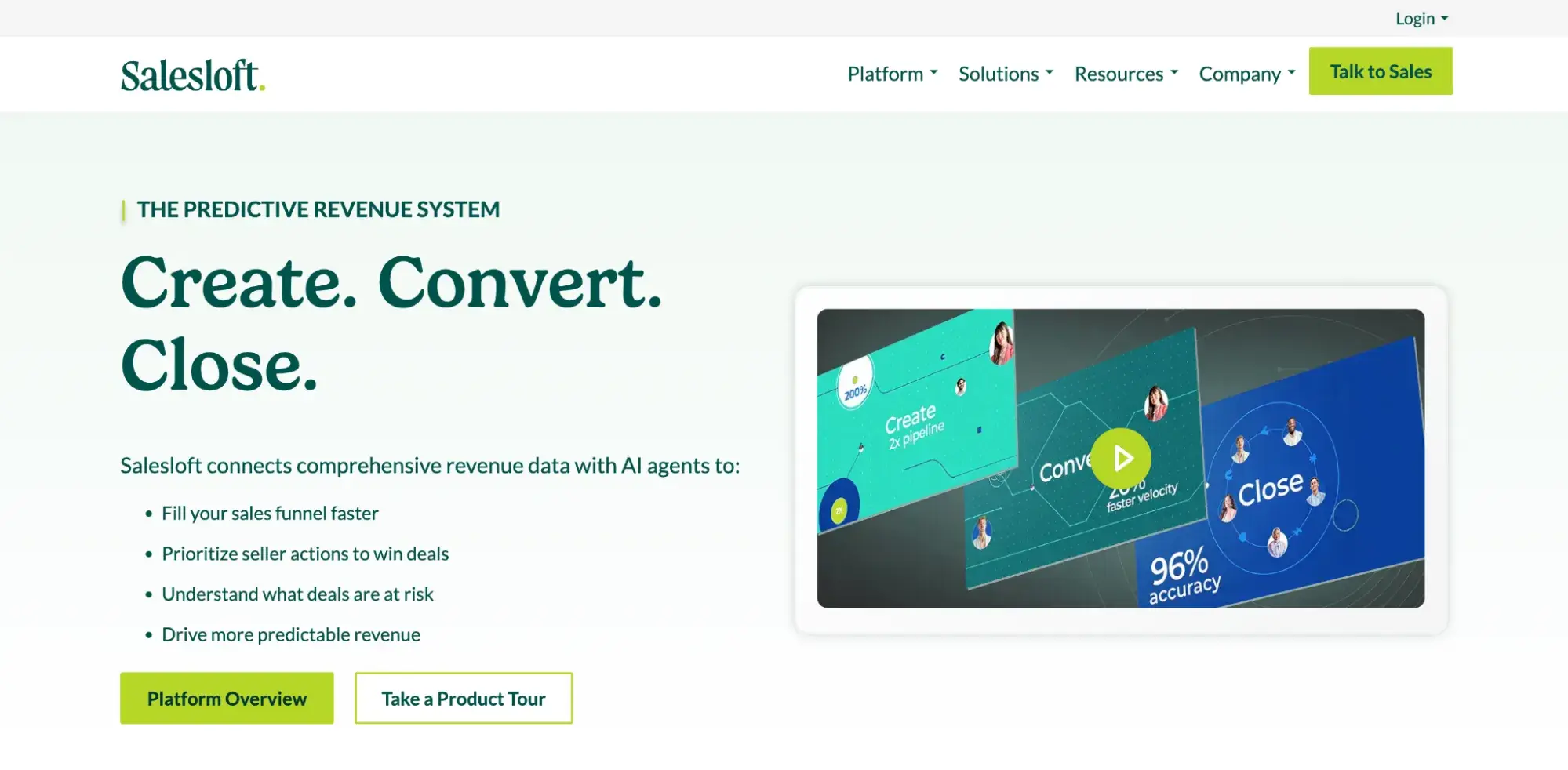
Salesloft is a sales engagement platform that helps revenue teams manage and automate their outreach across email, phone, and social channels. It’s built around the concept of cadences, giving reps a structured, repeatable way to engage prospects while giving managers full visibility into what’s happening across the team.
Key Features
- Cadence management: Build and automate multi-step outreach sequences across email, calls, and LinkedIn. Teams can also set custom time intervals and personalize steps based on prospect behavior or deal stage.
- Deal intelligence: Track deal health across the pipeline by monitoring engagement signals, email activity, and meeting frequency, and flagging deals that show signs of stalling.
- Conversation intelligence: Record and transcribe sales calls, then surface key moments like objections and competitor mentions to help managers coach reps more effectively.
Pricing: Salesloft does not publicly list its pricing. Teams need to contact Salesloft directly for a quote.
What we like: Salesloft’s deal intelligence layer sets it apart from a basic sequencing tool. Rather than just tracking whether emails got opened, it monitors the overall health of a deal based on engagement patterns and flags risk early.
This proactive visibility goes a long way for sales managers who are tired of finding out a deal went cold only when it drops off the forecast.
Best for: Sales teams looking for a dedicated engagement platform to standardize rep activity, automate outreach cadences, and get better visibility into what’s driving the pipeline.
4. Outreach
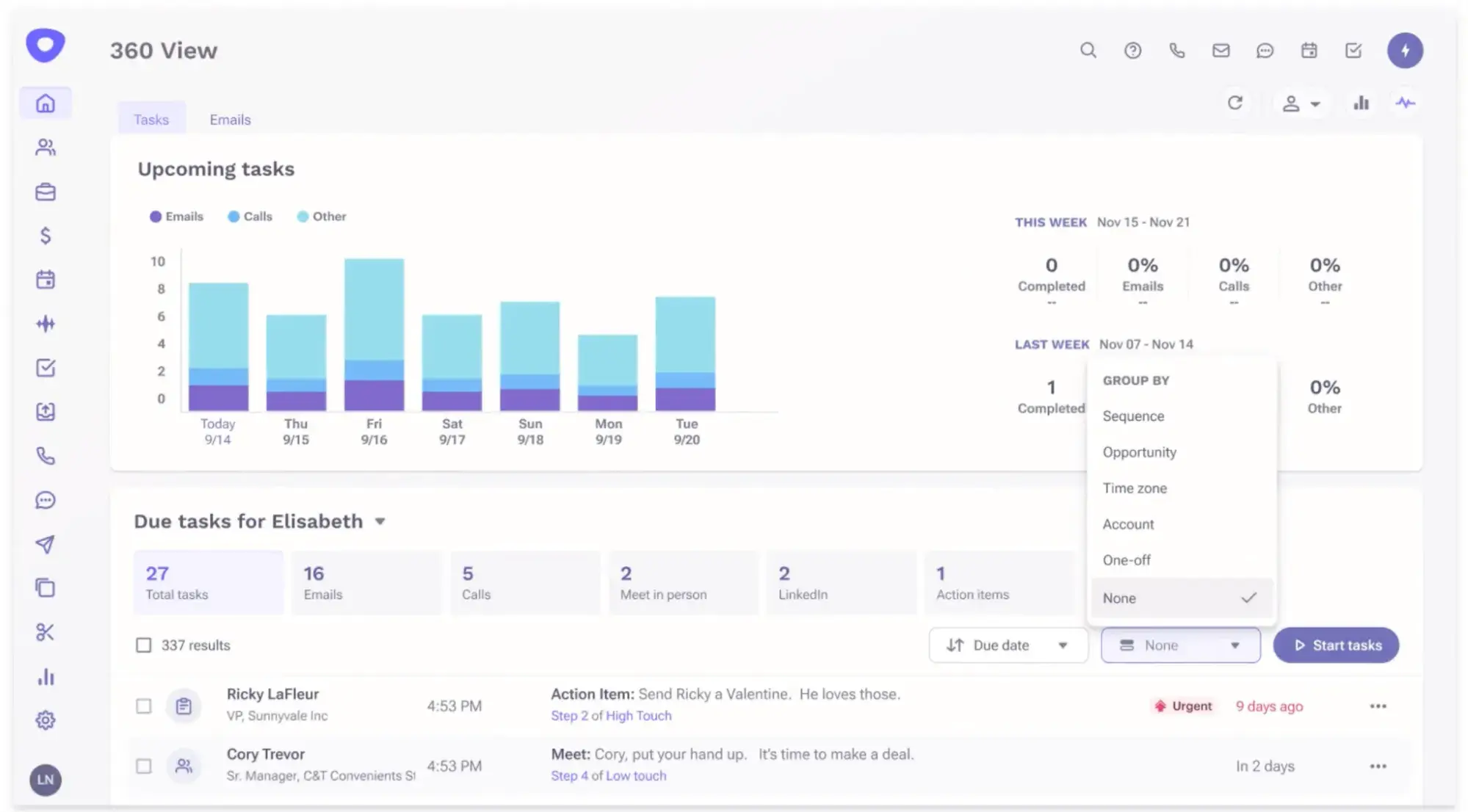
Outreach is a sales execution platform that helps revenue teams manage prospect engagement, monitor deal health, and forecast pipeline more accurately. It goes beyond sequencing by helping teams manage sales workflows from first touch to close, which makes it a fit for larger sales organizations with more complex processes.
Key Features
- Sequences and automation: Build multi-channel outreach sequences across email, phone, and social. AI-assisted suggestions help reps optimize send times, adjust messaging, and identify the next best action based on how prospects are engaging.
- Deal management: Get a centralized view of every open deal, including engagement history, stakeholder activity, and risk signals, so reps and managers always know where each opportunity stands.
- AI-powered forecasting: Generate revenue forecasts based on engagement data and pipeline activity to help sales leaders evaluate which deals are likely to close.
Pricing: Outreach does not publicly list its pricing. Teams need to contact Outreach directly for a quote.
What we like: I like that Outreach treats forecasting as a core part of the sales execution process rather than a separate reporting function. Because its forecasts draw on actual engagement data (such as emails sent, meetings held, and prospect responses) rather than what reps manually log, the numbers tend to be more reliable.
Best for: Mid-market and enterprise sales teams that need a robust engagement platform with built-in pipeline management and AI-driven forecasting.
5. Gong
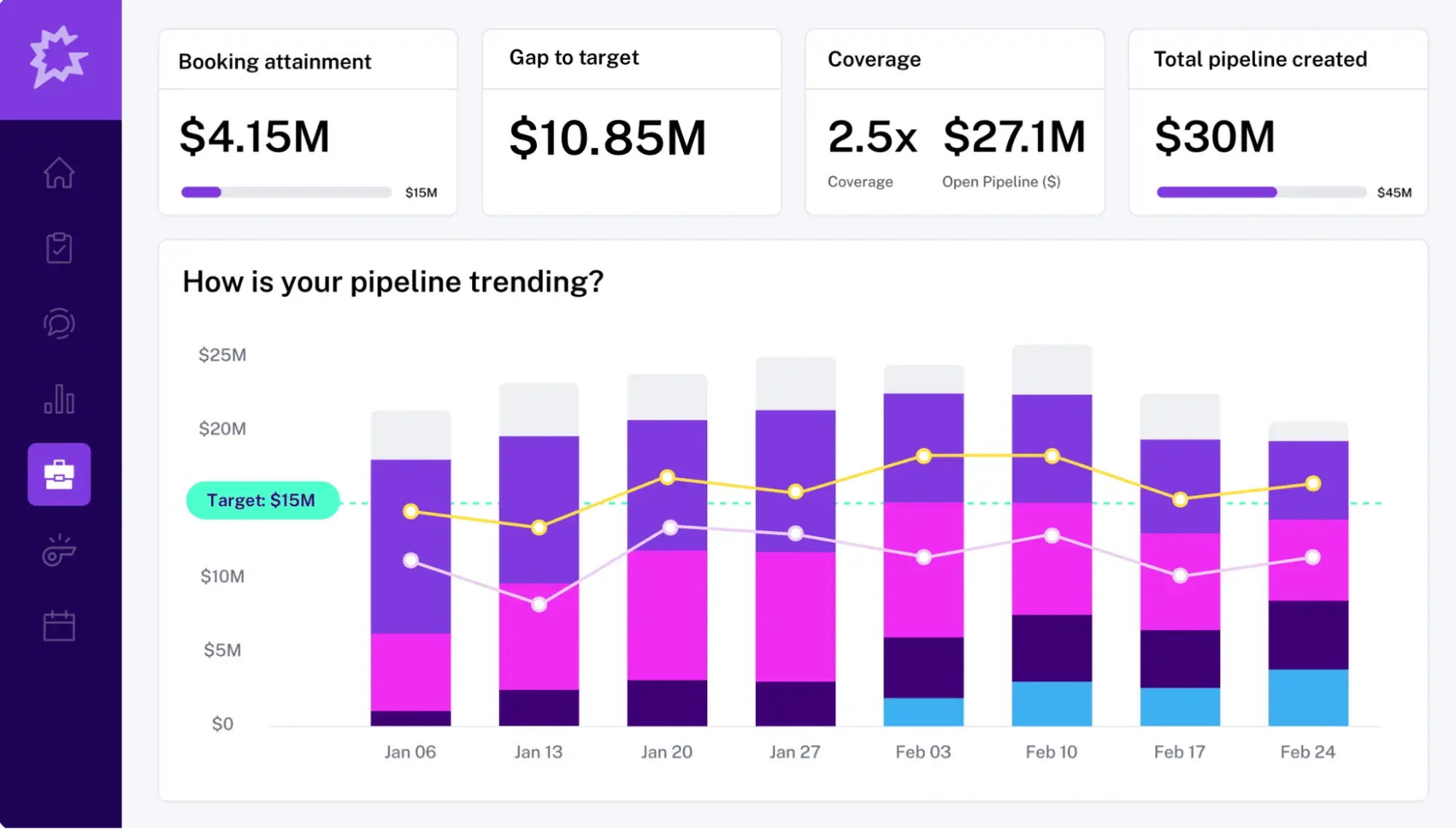
Gong is a conversation intelligence platform that records and analyzes sales interactions. It surfaces patterns across thousands of interactions to help sales teams understand what winning deals look like, where reps are losing ground, and how to consistently replicate what top performers do.
Key Features
- Call recording and transcription: Automatically record and transcribe every sales call and meeting, making it easy to search conversations by keyword, topic, or deal stage without listening to the entire recordings.
- Deal intelligence: Track deal health using engagement data, including email activity, call frequency, and buyer involvement, and flag deals at risk of stalling.
- Rep coaching and feedback: Identify specific moments in calls where reps can improve, share annotated clips with feedback, and track whether coaching is translating into better performance over time.
Pricing: Gong does not publicly list its pricing. Teams need to contact Gong directly for a quote.
What we like: I like Gong’s winning behavior analysis because it helps sales leaders scale what their best reps are doing.
Rather than relying on managers to manually listen to calls and spot patterns, Gong analyzes the entire team’s conversation history and surfaces insights that help leaders coach their reps effectively.
Best for: Sales teams and managers who want deep visibility into what’s happening on calls and in deals, and want to use that data to coach reps and improve win rates.
6. Clari
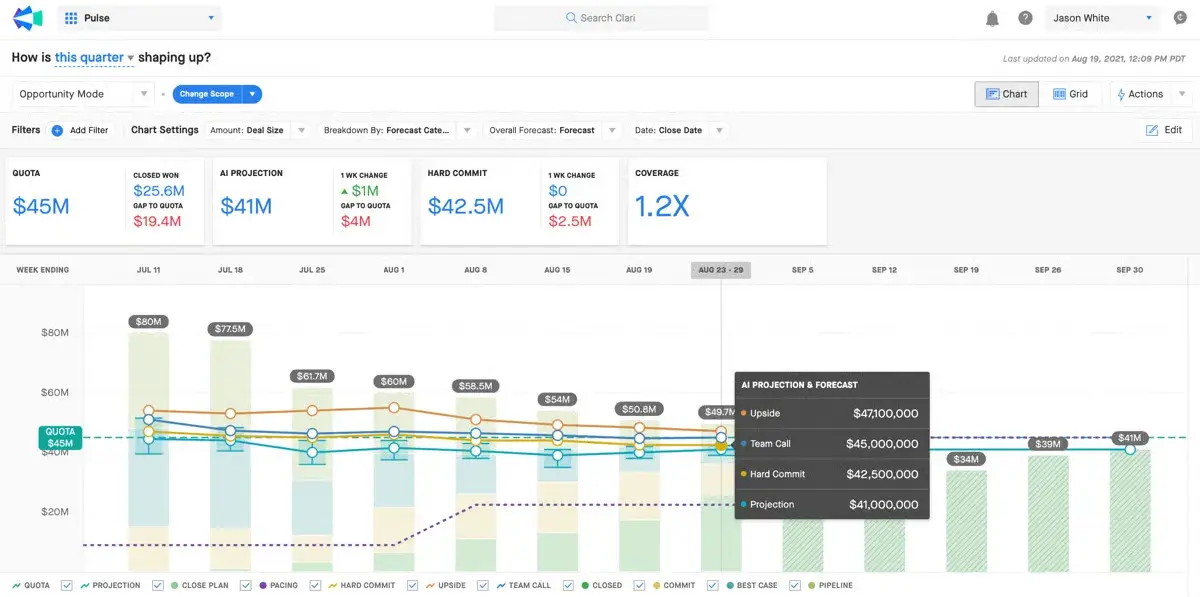
Clari is an enterprise revenue orchestration platform that helps sales organizations track pipeline movement, predict outcomes, and identify revenue risk before it’s too late to act. It pulls data from the CRM, email, calendar, and other activity sources to give teams a single, reliable view of where revenue stands at any given moment.
Key Features
- AI-powered forecasting: Generate forecasts based on actual pipeline activity and historical patterns rather than rep-submitted numbers. That gives sales leaders a more objective and consistent view of what’s likely to close each period.
- Pipeline inspection: Examine pipeline health at every level (rep, team, segment, or region) to identify stalled deals, coverage gaps, and where the pipeline is created or lost.
- Revenue leak detection: Identify patterns that signal revenue risk, such as deals with no recent activity, single-threaded opportunities, or a pipeline that consistently slips from one quarter to the next.
Pricing: Clari does not publicly list its pricing. Teams need to contact Clari directly for a quote.
What we like: Clari’s revenue leak detection is one of those features that can quickly pay for itself. Many teams don’t realize how much the pipeline has slipped until they look back at the end of a quarter.
Clari surfaces those patterns in real time, whether it’s deals stuck in the same stage for weeks or opportunities with no stakeholder engagement. It gives revenue teams a chance to act on problems while there’s still time to fix them.
Best for: Revenue operations and sales leadership teams that need accurate, real-time visibility into pipeline health and want to build more reliable, data-driven forecasts.
7. Chili Piper
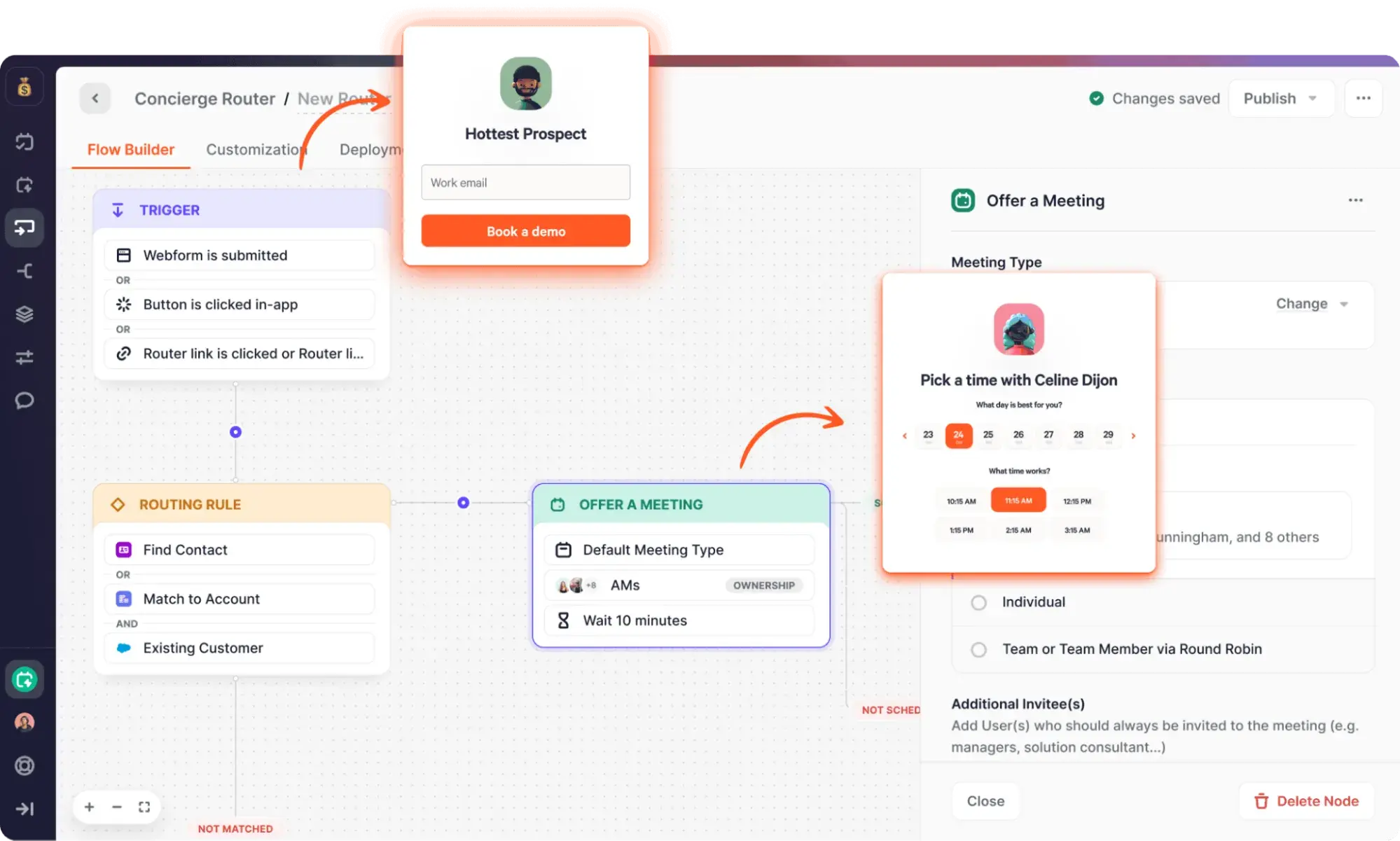
Chili Piper is a demand conversion platform that helps sales teams convert inbound leads faster by automating meeting scheduling and lead routing. Instead of leads sitting in a queue or going back and forth over availability, Chili Piper routes them to the right rep instantly and lets them book a meeting in seconds.
Key Features
- Meeting scheduling: Let prospects book meetings directly from emails, landing pages, or forms using a real-time calendar that reflects rep availability.
- Instant lead routing: Automatically route inbound leads to the right rep based on custom rules like territory, account ownership, company size, or round-robin assignment. That reduces the time between a lead coming in and a rep making contact.
- Form concierge: Qualify and route leads immediately upon form submission on the website. A booking page appears immediately, allowing high-intent prospects to schedule a call on the spot.
Pricing: Chili Piper does not offer a free trial or free plan. Paid plans start at $30/user/month, billed annually.
What we like: Many teams put a lot of effort into driving traffic to a landing page or getting a prospect to fill out a form, only to lose that momentum by making them wait for a follow-up email.
I like that the form concierge feature removes that gap by presenting a booking page the moment the form is submitted, so high-intent leads can lock in a meeting before interest fades.
Best for: Sales teams looking to eliminate scheduling friction and route inbound leads to the right rep as quickly as possible.
8. DealHub
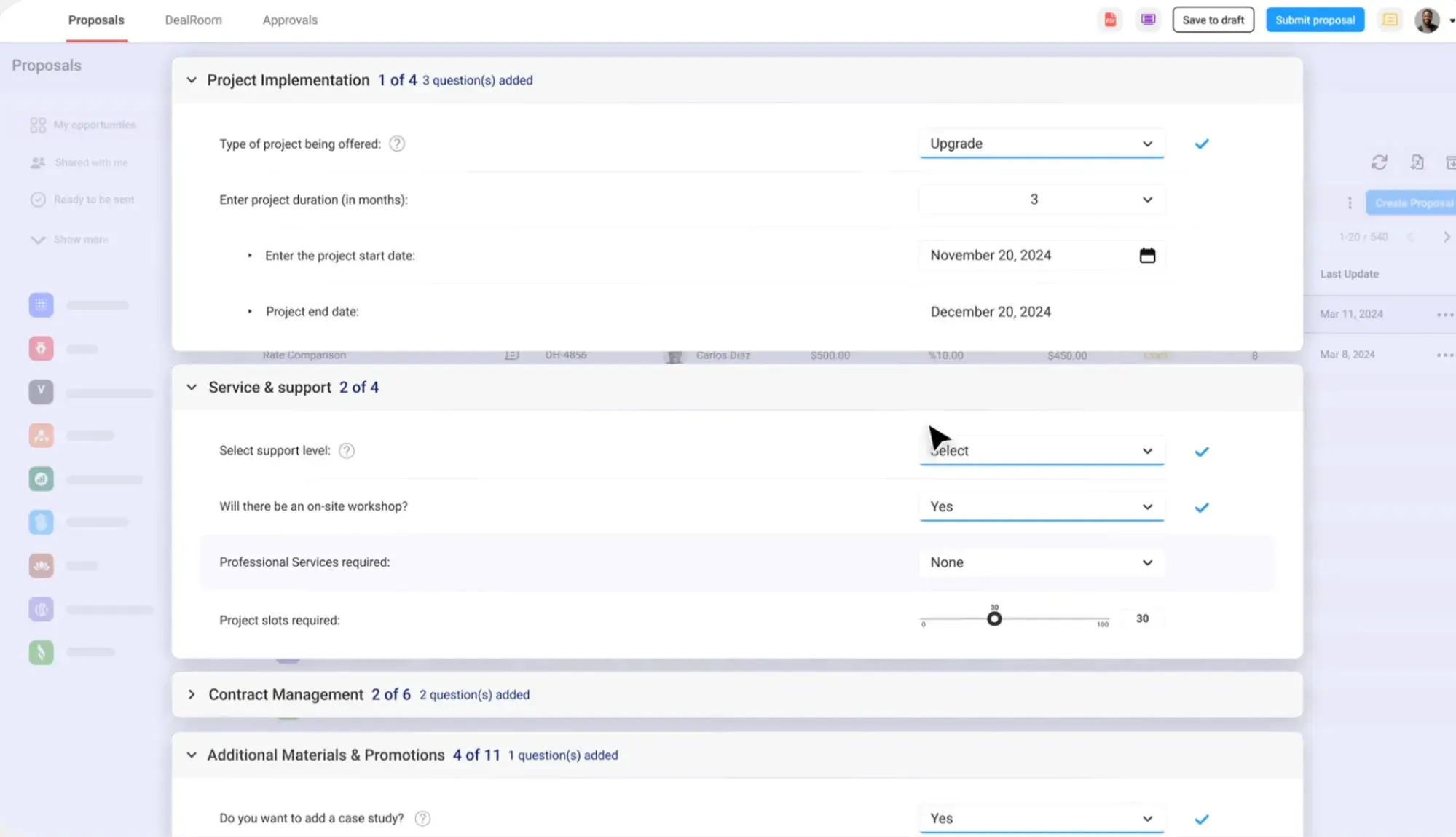
DealHub is a configure, price, quote (CPQ) and proposal management platform that helps sales teams generate quotes, send proposals, and manage approvals. It integrates pricing, approvals, and contract management into a single workflow, so deals don’t lose momentum while waiting on internal sign-offs or manual document preparation.
Key Features
- CPQ: Build customized quotes through a guided selling flow and apply pricing rules or discount limits before finance review.
- DealRoom: Send prospects an interactive proposal page that brings the quote, contract, and supporting materials into one place so buyers can review the details without chasing down multiple documents.
- Approval workflows: Set up approval rules for discounts, custom pricing, or nonstandard contract terms so the right reviewers can sign off quickly.
Pricing: DealHub does not publicly list its pricing. Teams need to contact DealHub directly for a quote.
What we like: I really like the DealRoom feature. Instead of sending a prospect a PDF proposal, a separate contract, and a string of follow-up emails, everything lives in one branded, interactive page.
That makes the buying experience cleaner for the prospect and gives the rep visibility into who has viewed the proposal and what they’ve engaged with, so follow-ups are a lot more targeted.
Best for: Sales teams that want to speed up the quoting and proposal process and reduce the back-and-forth between sales, finance, and legal teams.
How to Evaluate a Sales Acceleration Tool
The right sales acceleration platform depends on a team’s size, CRM setup, sales process, and biggest pipeline bottlenecks. Before comparing demos or pricing pages, teams should evaluate how each tool fits into the systems reps already use.
1. CRM Integration and Data Compatibility
A sales acceleration platform is only as good as the data it can access. Teams should confirm whether the tool offers a native CRM integration or relies on a third-party connector, how data flows between the two systems, and whether contact and activity data updates in real time. A tool with weak integration causes reps to work from incomplete information and limits managers’ visibility into the pipeline.
2. Ease of Rep Adoption
A tool that reps don’t use consistently delivers no value, regardless of how many features it has. So, instead of dwelling on features, teams should ensure the interface is intuitive enough for reps to get up to speed quickly, and the workflows fit naturally into how they already work. Teams should also confirm what onboarding support and training resources are available before rollout.
3. Automation Depth and Flexibility
Teams should look beyond basic email sequencing and evaluate whether the platform can trigger multi-channel workflows across email, phone, and LinkedIn based on prospect behavior or CRM events. Teams should also check whether reps can build and customize workflows without technical support and whether each pricing tier limits the number of sequences, contacts, or automation steps.
4. Reporting and Pipeline Visibility
Sales acceleration tools generate a lot of activity data, but the real question is whether that data connects to pipeline outcomes. Look for platforms that:
- Track key metrics like sales velocity and conversion rates by pipeline stage.
- Provide managers with a rep-level breakdown of activity and performance.
- Surface at-risk deals based on engagement signals rather than just close date.
5. AI and Intelligence Features
AI appears in many sales tools, but the quality and practical usefulness vary significantly. The most valuable AI features are those that automate repetitive tasks and/or surface insights that reps and managers actually act on. Examples include:
- AI-powered prospecting
- Dynamic lead scoring
- AI-assisted outreach drafts
- Conversation intelligence
- Forecasting models that draw on actual activity data
6. Pricing Structure and Total Cost of Ownership
Many sales acceleration platforms look affordable at first glance, but quickly become expensive as the team grows or needs access to more advanced features. Teams should factor in the costs of required integrations, onboarding, and training fees, as well as how pricing scales over time, rather than just the base subscription cost.
Featured Resource: Generative AI for sales: How sales reps can use it in 2026
FAQs About Sales Acceleration Platforms
Is a CRM the same as a sales acceleration platform?
Not exactly. A CRM stores and manages customer data, while a sales acceleration platform uses that data to drive action.
However, some CRM products, including HubSpot Smart CRM when used with Sales Hub, include acceleration features such as email sequencing, lead scoring, and revenue forecasting. That means teams may not need a separate tool for every sales acceleration workflow.
When should you implement a sales acceleration platform?
The right time is when the team has a defined sales process but is struggling to execute it consistently. If reps are missing follow-ups, pipeline visibility is poor, or the sales cycle is longer than it should be, a sales acceleration platform can help. However, teams should have a clear sales process in place before implementing one to prevent complexity and resource waste.
What KPIs prove sales acceleration is working?
The most telling metrics are sales velocity, win rate, average deal cycle length, and lead response time. Teams should also track sequence reply rates and conversion rates at each pipeline stage. The goal is to see these numbers trend up consistently over time, not just spike after the initial rollout.
How do we avoid tool sprawl when adding acceleration tools?
Start by auditing what the current stack already does. Many teams already have tools with overlapping features they’re not fully using. Before adding anything new, identify the specific gap to fill and evaluate whether an existing tool can close it first.
A CRM-connected sales tool can be a cleaner choice than another point solution, especially when it keeps sales activity, deal data, and reporting in one place.
Do we need data cleanup before rollout?
Yes. A sales acceleration platform relies heavily on CRM data to score leads, trigger sequences, and generate forecasts. If that data is outdated, incomplete, or inconsistent, the platform will produce unreliable outputs.
At a minimum, teams should clean up contact records, standardize deal stages, and resolve duplicate entries before going live.
Accelerate revenue growth with Sales Hub and HubSpot Smart CRM.
A sales acceleration platform provides sales and revenue teams with the tools, data, and automation they need to engage the right prospects, follow up consistently, and move leads smoothly through the pipeline. However, many teams struggle to find a sales acceleration tool that meets multiple needs without creating a bloated stack that’s clunky to use and expensive to manage.
Sales Hub solves that problem by bringing prospecting, outreach, pipeline management, forecasting, meeting scheduling, and conversation intelligence into one connected system.
Because Sales Hub works with HubSpot Smart CRM, reps can manage more of their sales process without switching between disconnected tools mid-workflow. There’s also no need for reps to switch between tools mid-workflow. Sales teams get a faster, more consistent sales process, and leaders get a reliable view of the pipeline at all times.