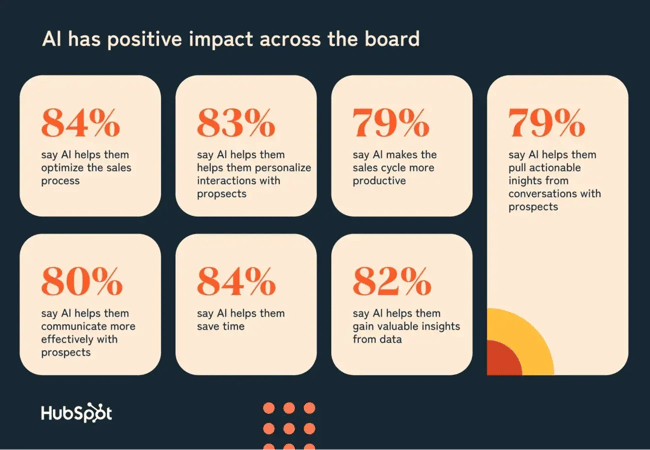
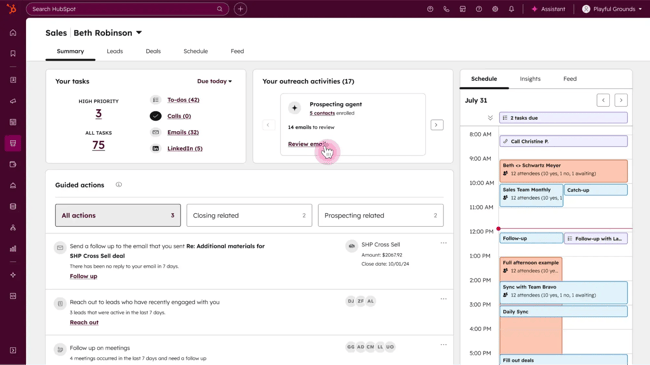
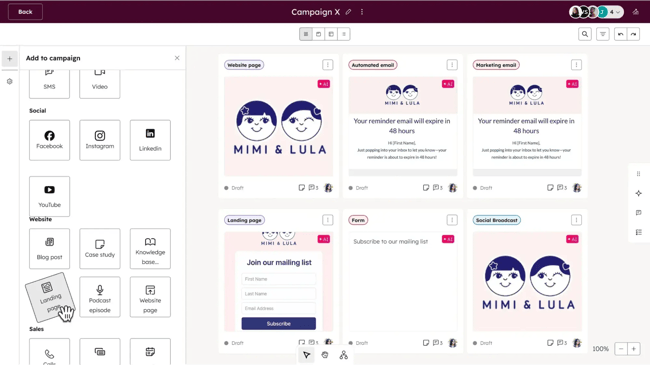
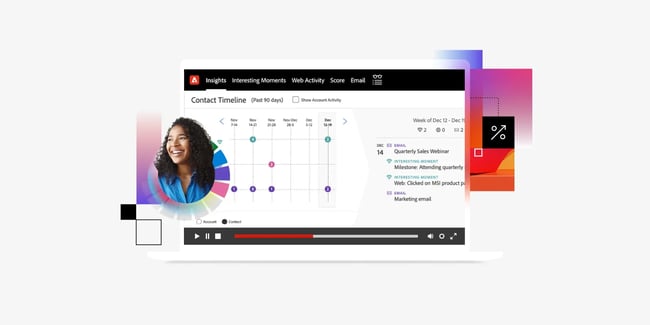
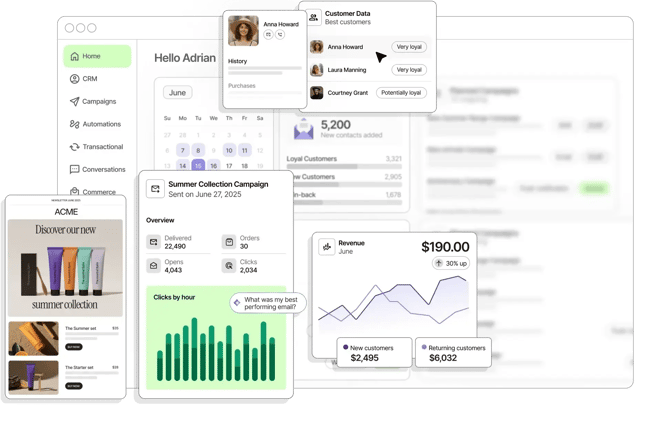
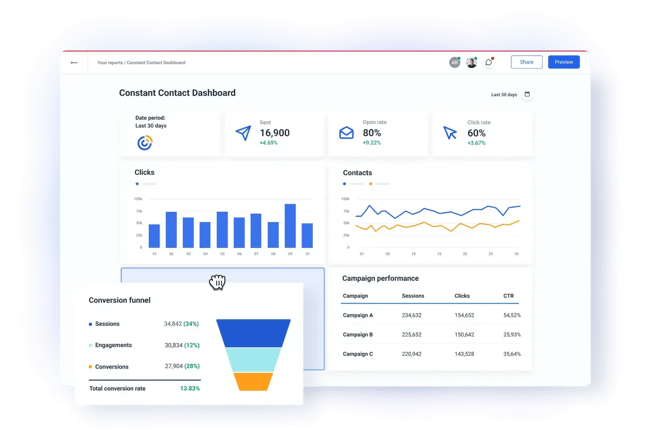
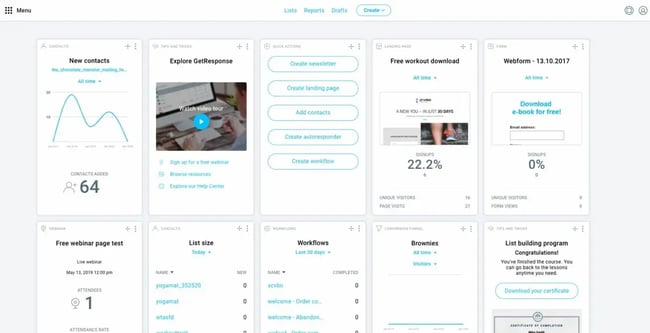
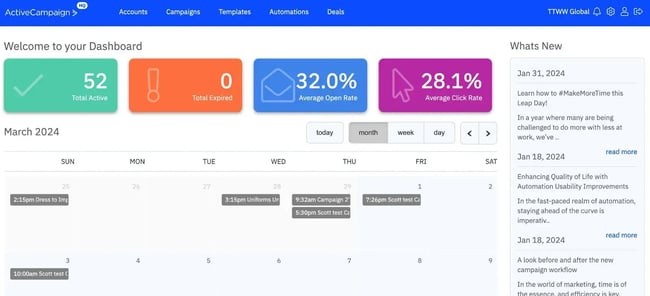
Lead nurturing tools automate the process of moving prospects from initial interest to sales readiness through targeted, behavior-triggered communication. These platforms send timely emails, score engagement, trigger workflows based on behavior, and help teams focus on the leads most likely to close. Lead nurturing tools automate the process of moving prospects from initial interest to sales readiness through targeted, behavior-triggered communication. These platforms track how leads interact with content, then deliver the benefits of lead nurturing through relevant follow-up messages based on their specific actions and engagement patterns. The core workflow is straightforward: A lead takes an action, like downloading a guide or visiting a pricing page. The tool logs that activity, assigns a score based on engagement level, and enrolls the contact into a targeted email sequence or workflow. Over time, the system continues nurturing until the lead reaches a threshold that signals sales readiness. For teams getting started, HubSpot Academy’s guide to creating a lead nurturing workflow walks through the complete setup process. Segmentation divides the lead database by attributes like job title, engagement level, or purchase intent so different groups receive different content. Sales teams aren’t starving for leads — 68% say lead quality has actually improved over the past year. When contact databases contain more good-fit buyers, blasting everyone with the same nurture wastes hard-won attention and marketing budget. Segmentation lets marketing teams group leads by role, industry, and engagement so CFOs receive a very different message than practitioners, and high-intent visitors receive a different cadence than casual subscribers. Dynamic content swaps out email copy, images, or CTAs based on the recipient’s attributes. A lead in healthcare might see industry-specific case studies, while a lead in finance sees different strategy examples — all from the same email template. Seventy-four percent of sellers say AI tools have made it easier for buyers to research products on their own. By the time prospects enter a nurture sequence, they‘ve already compared vendors and know the basics — generic emails just repeat information they’ve seen. Dynamic content lets marketers swap in industry-specific examples, objections, and use cases based on each lead‘s profile, so the nurture can continue the buyer’s research rather than starting from scratch. Lead scoring separates active buyers from casual browsers by assigning values to behaviors. Multiple pricing page visits, demo requests, and email replies accumulate points that flag a lead as sales-ready. Lead scoring systems combine explicit data, such as job title and company size, with implicit signals, such as email engagement and website activity. Negative scoring filters out unqualified leads like students or competitors. When deals fall apart, it‘s rarely because sales teams didn’t send enough emails — 37% of lost deals happen because buyers aren‘t convinced the product is right for them. Lead scoring brings that ’fit‘ question to the forefront by assigning higher scores to behaviors that historically correlate with closed-won deals. Marketing can nurture low-scoring leads with educational content, while sales focuses on high-scoring leads where there’s a clear problem-solution match. Multi-channel orchestration treats email, SMS, social media, and the web as connected steps in a single journey. If a lead clicks an email link but doesn’t convert, they automatically enter a retargeting sequence on social without manual handoffs between platforms. Orchestration ensures each touchpoint builds on the last, regardless of channel. makes it one of the most effective lead-nurturing tactics for complex buyer journeys where a single touchpoint rarely drives conversion. A/B testing runs controlled experiments on emails, subject lines, CTAs, and landing pages to determine which perform better. Personalization isn‘t just ’Hi [ first name]’— 27% of sellers still list personalization as a major challenge in their sales process. Testing at scale replaces assumptions with evidence about what actually increases open rates, click-throughs, and conversions. Teams can test subject lines, CTA placement, and send timing to build a clearer picture of what personalized means for each persona. Analytics identify which campaigns drive conversions, where leads exit the funnel, and how different segments respond. Without detailed reporting, teams see surface metrics like opens and clicks but can’t trace which nurture emails actually influenced deals. Strong platforms measure email engagement, workflow completion, segment conversion rates, and campaign revenue attribution. Advanced systems connect specific nurture touches to closed deals, showing that one email sequence contributed to 15 conversions worth $500K while another generated none. Teams can then expand high-impact campaigns and eliminate low performers based on revenue data to measure lead nurturing success. AI analyzes patterns across thousands of interactions to predict optimal send times, recommend next-best actions, and personalize content at a scale no human team could match. Only 8% of sellers say they don’t use AI at all in their process, and AI is ranked among the highest-ROI tools in the stack. AI-powered tools automatically adjust send times based on past open behavior, generate personalized email copy or subject line variations, surface leads showing buying signals before they reach a score threshold, and recommend which offer or asset to present next based on similar lead journeys. CRM integration ensures lead data, activity history, and engagement scores flow seamlessly between marketing and sales systems. Marketing and sales leaders should prioritize native integrations that sync bidirectionally. The handoff should trigger automatically when a lead hits a threshold, creating a task for sales with full context attached. This eliminates gaps, speeds up response times, and increases the likelihood that qualified leads actually convert. Teams new to automation can learn the fundamentals through HubSpot Academy’s course on creating a lead nurturing workflow. Compliance tools automatically manage consent, honor opt-outs, and enforce privacy regulations such as GDPR and CAN-SPAM. Platforms need audit trails showing when consent was captured, suppression lists that exclude opted-out contacts, and automated workflows that adjust to regional privacy laws. Non-compliance creates legal exposure and deliverability problems when ISPs flag accounts for ignoring unsubscribe requests. Platforms with built-in safeguards prevent these issues without forcing teams to manually audit spreadsheets. The right lead nurturing tool depends on the business model, team size, and the level of sophistication the workflows require. Some tools excel at simplicity and quick setup, while others handle enterprise-scale complexity across dozens of campaigns. This section breaks down the top platforms based on real user feedback, standout features, and pricing to help find the best fit for nurturing strategy. The table below summarizes each platform at a glance. Full breakdowns follow. HubSpot Sales Hub is a sales engagement and productivity platform that combines prospecting tools, email automation, meeting scheduling, and pipeline management with native CRM integration to help sales teams close deals faster. What differentiates Sales Hub from standalone sales tools is how it bridges the gap between marketing activity and sales execution using shared customer data. When a lead downloads content through Marketing Hub or engages with a chatbot, that behavioral history flows directly into Sales Hub where reps can see exactly what triggered the lead’s interest. The Breeze Prospecting Agent automates research by finding high-fit prospects and enriching contact records with company data, while AI Guided Selling surfaces the right leads and next actions in daily queues so reps spend less time deciding who to call. Sales automation handles personalized email sequences that adapt based on prospect engagement, and the meeting scheduler eliminates back-and-forth by syncing calendars and sending automated reminders. Playbooks give reps guided scripts, competitive positioning, and qualification frameworks directly in the CRM during calls — then capture structured notes that become reportable data instead of messy text fields. Verdict: Sales Hub makes the most sense for teams that want sales and marketing to work from a single source of customer data without building complex integrations. Reps see every marketing touchpoint automatically, and the Breeze Prospecting Agent saves hours on research. If already using HubSpot Marketing Hub or want a unified platform that connects marketing, sales, and service on a shared data foundation, get the productivity and visibility needed to close deals faster. G2 rating: 4.4/5 HubSpot Marketing Hub is an all-in-one inbound marketing platform that combines lead generation, email automation, content management, and analytics with native CRM integration to support the full customer lifecycle. Unlike standalone email tools or marketing platforms that bolt onto CRMs through third-party integrations, Marketing Hub shares the same database as HubSpot’s Sales Hub and Service Hub. This means every form submission, email click, page view, and social interaction automatically updates contact records in real time — no CSV imports, no data sync delays. When a lead downloads an ebook through a Marketing Hub form, sales reps see that activity instantly in the CRM timeline alongside every other touchpoint. The platform scales from HubSpot’s free marketing tools for startups to enterprise features for large marketing teams. The free tier includes email campaigns, forms, live chat, and landing pages, with up to 2,000 email sends per month — enough for small teams to launch inbound lead-generation programs without a budget. Advanced features like multi-touch attribution, website personalization, and customer journey analytics require the Professional tier at $890/month, which represents a significant investment but unlocks the tools that prove marketing’s impact on revenue. Verdict: For teams that want marketing and sales working from the same customer data without integration headaches, Marketing Hub is the right choice. Lead handoffs happen automatically with full context, and the free tier gives small businesses real functionality to start generating leads immediately. It’s the unified foundation teams need if they’re building a growth engine that spans marketing, sales, and service. G2 rating: 4.4/5 Marketo Engage is Adobe’s enterprise marketing automation platform built for complex B2B organizations that need sophisticated multi-touch nurture programs, deep CRM integration, and advanced attribution across long sales cycles. The platform handles nested campaigns with multiple streams, conditional logic, and cross-channel orchestration that simpler tools can’t match. Users praise the powerful automation engine and native Salesforce integration. That enterprise capability comes with serious complexity — new users consistently report a steep learning curve, and the interface feels less intuitive than modern alternatives. The platform requires technical skills to use effectively, and custom pricing can drive costs significantly higher. Verdict: Enterprise B2B organizations with long sales cycles, large contact databases, and complex account-based marketing programs will get the most value from Marketo Engage. The platform excels at orchestrating sophisticated nurture journeys with multiple touchpoints, and the Salesforce integration keeps marketing and sales aligned. Small marketing teams or companies with straightforward nurture needs should look elsewhere since the complexity and cost only make sense when managing thousands of leads. G2 rating: 4.1/5 Brevo (formerly Sendinblue) combines email marketing, SMS, WhatsApp, and transactional messaging in one platform with a focus on affordability and ease of use for small to mid-sized businesses. Unlike platforms that charge based on contact list size, Brevo prices by emails sent, which saves money for teams with large lists but lower send frequency. Users praise the straightforward setup, drag-and-drop editor, and responsive customer support. The platform includes marketing automation, landing pages, and A/B testing at lower price points than enterprise alternatives. The downside is limited design flexibility in templates and basic automation compared to more advanced tools. Verdict: Small businesses and growing teams that need multi-channel marketing without enterprise budgets should consider Brevo. The pricing model works well if teams have a large contact list but send infrequently, and the interface lets marketers launch campaigns quickly. Teams requiring advanced automation logic or extensive template customization will outgrow Brevo’s capabilities faster than its pricing suggests. G2 rating: 4.5/5 Constant Contact is an entry-level email marketing platform designed for small businesses and beginners who need straightforward tools to send newsletters, promotions, and automated campaigns without technical complexity. Users praise the drag-and-drop editor, pre-built templates, and quick campaign setup that let teams launch emails in minutes without design experience. The platform includes AI content generation to draft email copy and transform emails into social posts. Pricing starts lower than enterprise alternatives. The tradeoff is limited customization — users frequently report frustration with restrictive templates, basic design options, and layout constraints that make truly custom emails difficult. Verdict: Small businesses and solopreneurs who need simple email marketing without a steep learning curve will find Constant Contact approachable. The AI content tools speed up writing, and the drag-and-drop editor makes it easy to launch campaigns quickly. Growing businesses that need sophisticated automation or extensive design control should skip it since the platform’s simplicity becomes a constraint as marketing programs mature. G2 rating: 4.1/5 GetResponse combines email marketing, marketing automation, and multi-channel engagement tools into a single platform designed to nurture leads across email, SMS, web push, and live chat. Users praise the clean design and intuitive navigation, which makes it easy to launch autoresponder sequences, build landing pages, and deploy popups without technical expertise. That simplicity works well for teams new to automation, but cracks appear when workflows grow complex — automation triggers can feel inconsistent, and support quality varies. The entry-level Starter plan limits users to just one custom automation workflow. Teams serious about nurturing need the Marketer plan for unlimited workflows and advanced segmentation. Verdict: Teams that need affordable multi-channel nurturing without heavy CRM dependencies will get solid value from GetResponse. It handles email automation, landing pages, and web push well, and the Marketer plan delivers good functionality for growing lists. Organizations requiring tight CRM integration or advanced automation logic without workarounds should expect to hit platform limits faster than expected. G2 rating: 4.3/5 ActiveCampaign combines automation, email marketing, and CRM tools to help teams nurture leads across email, SMS, and WhatsApp from one platform. The automation builder is the platform’s biggest strength. Users praise its flexibility and power for creating targeted email sequences, scoring leads, and personalizing content based on customer behavior. That power comes with a learning curve — new users often struggle with the initial setup and find the interface harder to navigate than simpler email tools. The platform connects marketing and sales data well, though some users wish the form builder offered more customization options. Verdict: If sophisticated automation is needed and teams aren’t afraid of a learning curve, ActiveCampaign is worth the investment. The AI Campaign Builder speeds up campaign creation, and the predictive sending improves engagement without manual testing. Simple setup or tight budgets point elsewhere since it takes effort to master, and pricing adds up as the list grows. G2 rating: 4.5/5 Klaviyo builds lead nurturing around ecommerce data, tracking every product view, cart addition, and purchase to create detailed customer profiles that trigger automated campaigns across email, SMS, and other channels. The platform knows which products someone browsed, predicts when they’ll need to reorder based on past purchases, and estimates their potential value before they buy. Users love how easily it connects to Shopify and WooCommerce to automatically pull this data. The K:AI Marketing Agent analyzes products and builds welcome emails, abandoned cart reminders, and post-purchase sequences in minutes. New users find the interface harder to navigate than simpler tools. Verdict: Ecommerce brands that need automation based on shopping behavior will see the strongest results with Klaviyo. The platform turns browsing and purchase data into personalized campaigns better than general email tools, and allowing team to see exactly how email, SMS, and other channels work together to drive sales. B2B companies or service businesses should skip it since Klaviyo is built specifically for online stores and the pricing reflects that focus. G2 rating: 4.6/5 I‘ve spent the last few years building my content strategy business almost entirely through inbound leads — most of them coming from LinkedIn or my website. The promise of AI-powered lead nurturing is tempting: automate everything and let the software handle prospect engagement while focusing on delivery. But after testing different tools and workflows, the best results come from a hybrid approach. Here’s where I let AI handle the heavy lifting and where I keep conversations human. I learned this the hard way after letting AI rewrite an entire email sequence for a client project. The open rates jumped 12%, but the responses felt generic and didn’t sound like the brand at all. Now I use AI to determine optimal send times and test subject line variations, but I write the actual messages myself and reference lead nurturing email examples to see what resonates with different audiences. The data shows that my emails perform best between 9-11 AM on Tuesdays for tech executives and on Thursday afternoons for marketing directors. AI figured that out faster than I ever could through manual testing. The same applies to LinkedIn — AI tells me my posts get the most engagement on Wednesday mornings, but writing every post manually tends to perform better because audiences respond to specific frameworks and real client examples, not generic AI-generated tips. AI can tell teams when to reach out, but it can’t replicate the strategic thinking behind what makes a message resonate with a specific audience I set up lead scoring early in my business to identify which downloads and page visits signaled real buying intent versus casual browsing. A lead who views pricing three times and downloads a case study is automatically flagged and I reach out within 24 hours. I also track LinkedIn engagement — if someone comments on two posts in a week and then visits my website, that‘s a qualified signal worth a personal message. That automation saves hours of manually checking who’s engaged. But when someone replies with “this seems expensive” or “we’re already working with another strategist,” I never let a chatbot or canned response handle it. Those objections reveal the real barriers to moving forward, and addressing them requires understanding context that AI doesn‘t have. I’ve won projects by acknowledging budget concerns in LinkedIn DMs and offering phased approaches — something a pre-written workflow would’ve missed. Behavioral triggers run lead nurturing on autopilot. When someone downloads my content brief template, they automatically get a follow-up email three days later with examples of how other strategists use it. On LinkedIn, I use automation to flag when connections engage with three or more posts in a month — that signals they‘re actively following my work and might be open to a conversation. These triggers work because they’re based on clear actions that indicate interest. If setting up triggers for the first time, HubSpot Academy’s training on creating a lead nurturing workflow explains how to identify the right behavioral signals. What shouldn‘t be automated is deciding which services to promote, which content to create next, or when to shift positioning. I recently overhauled my entire nurture sequence for enterprise clients after three prospects mentioned they needed help with Answer Engine Optimization in LinkedIn comments — something no AI would’ve caught from page-view data alone. I use HubSpot’s Breeze to personalize email greetings, insert company names, and adjust examples based on industry data stored in my CRM. A SaaS client gets different case studies than an agency, and the AI handles those swaps automatically across hundreds of contacts. This saves time from manually customizing every email while still making each message feel relevant. I apply similar logic to LinkedIn outreach — connection requests reference specific posts someone engaged with or companies they’ve worked for, pulled automatically from their profile data. But reviewing templates monthly matters because market language changes faster than expected. A phrase like “maximize ROI” that worked in January felt stale by March when everyone started talking about efficiency gains instead. I also caught an AI-generated LinkedIn message referencing “your team” sent to solopreneurs — technically accurate based on the data, but tonally wrong. Set up smart personalization, but don’t assume it stays smart without regular human oversight. No. Basic demographic and behavioral scoring works well for most teams starting out. Track actions like email opens, content downloads, and pricing page visits, then assign point values manually. Predictive scoring becomes valuable once teams have enough historical data (typically 1,000+ contacts and several months of closed deals) to train accurate models. SMS works best for time-sensitive updates, such as event reminders, abandoned cart alerts, or appointment confirmations, where immediacy matters. Chat (including AI chatbots) captures leads in real time and qualifies them through conversation before routing to sales or nurture sequences. Both channels complement email by reaching leads where they’re already engaged. Expect initial engagement metrics within days — open rates, click rates, and reply rates appear immediately. Conversion results take longer, typically 30-90 days, depending on the sales cycle length. B2B software sales might need 60+ days, while ecommerce could see conversions within weeks. Track leading indicators like engagement first, then measure pipeline impact over time. Single platforms reduce integration headaches and automatically synchronize customer data. If building lead nurturing from scratch or need marketing and sales working from shared data, unified tools like HubSpot or ActiveCampaign make sense. Multiple point tools work when teams need best-in-class features for specific channels, but require more technical resources to connect. Start by auditing current workflows — documenting triggers, email sequences, and segment logic — before making any changes. Export contact lists and email templates from the existing platform, then build and test new workflows using a small segment first. Running both platforms in parallel for two to four weeks helps catch issues before fully migrating remaining contacts. Choosing the right lead nurturing platform comes down to one thing: control. Teams need tools that surface high-intent leads early, adapt messages to each segment, and show which touchpoints actually move deals forward. The strongest platforms combine behavioral automation, AI-powered personalization, and CRM integration so marketing and sales work from the same data without manual reconciliation. For teams that want marketing, sales, and service connected on a single platform, HubSpot offers native CRM integration that ties every email, visit, and action to deal progression, making it easier to see what’s working and automate the rest.What are lead nurturing tools and how do they work?
What are lead nurturing tools and how do they work?
Must‑Have Features In Lead Nurturing Software.
Segmentation
Dynamic Content
Lead Scoring
Multi-Channel Orchestration
A/B Testing
Analytics and Reporting
AI-Powered Personalization and Automation
CRM Integration and Sales Handoff
Compliance and Data Governance
Best Lead Nurturing Tools to Boost Conversions In 2026
Lead Nurturing Tools Quick Comparison
1. HubSpot Sales Hub
Standout Features
Pricing
Pros and Cons
2. HubSpot Marketing Hub
Standout Features
Pricing
Pros and Cons
3. Marketo Engage
Standout Features
Pricing
Pros and Cons
4. Brevo (formerly Sendinblue)
Standout Features
Pricing
Pros and Cons
5. Constant Contact
Standout Features
Pricing
Pros and Cons
6. GetResponse
Standout Features
Pricing
Pros and Cons
7. ActiveCampaign
Standout Features
Pricing
Pros and Cons
8. Klaviyo
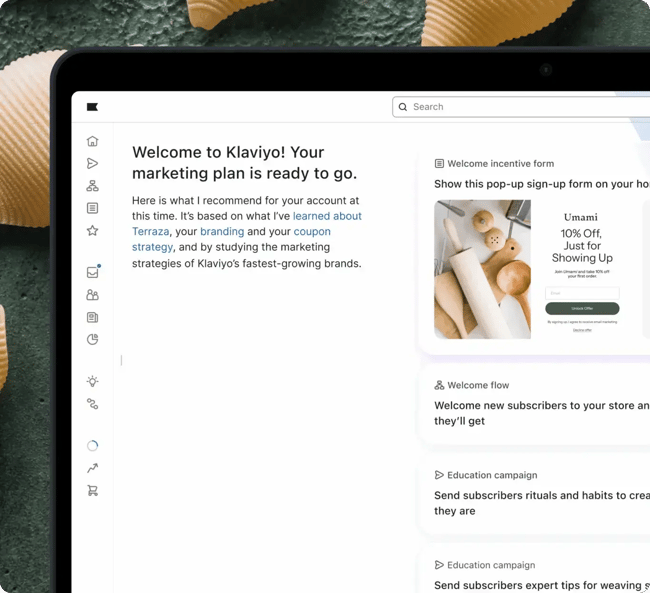
Standout Features
Pricing
Pros and Cons
AI in lead nurturing tools: What to automate and what to keep human.
AI should optimize when you send, not what you say.
Automate lead qualification, but let humans handle objections.
Use AI for behavioral triggers, keep strategic decisions manual.
Let AI scale personalization, but review templates monthly.
Frequently asked questions about lead nurturing tools
Do I need predictive lead scoring to get started?
How do SMS and chat fit into lead nurturing?
How quickly can I see results after launching a nurture?
Should I use a single platform or multiple point tools?
How do I migrate my existing nurtures without breaking anything?
How to Move Forward With The Right Platform